- Race
- Class
- Backgrounds
- Skills List
- Feats
- Artificer Spells
- Bard Spells
- Cleric Spells
- Druid Spells
- Paladin Spells
- Ranger Spells
- Sorcerer Spells
- Warlock Spells
- Wizard Spells
- Shopping
- Downloads
Dragonborn
Dragonborn
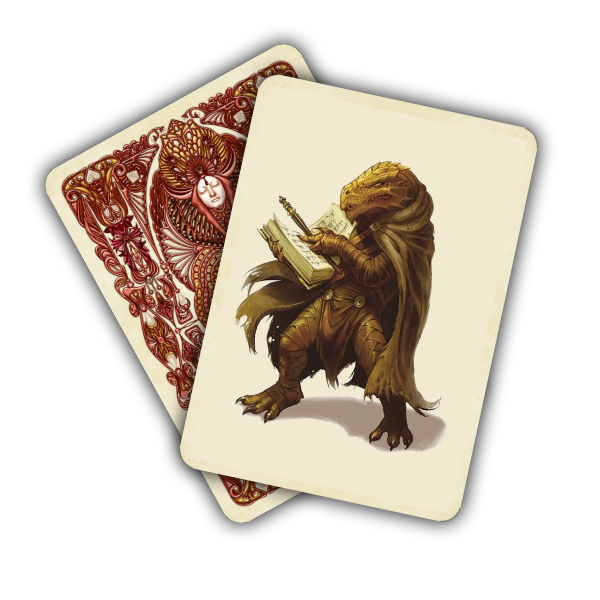
Born of dragons, as their name proclaims, the dragonborn walk proudly through a world that greets them with fearful incomprehension. Shaped by draconic gods or the dragons themselves, dragonborn originally hatched from dragon eggs as a unique race, combining the best attributes of dragons and humanoids.
Your Draconic heritage manifests in a variety of Traits you share with other dragonborn.
Ability Score Increase: Your Strength score increases by 2, and your Charisma score increases by 1.
Age: Young dragonborn grow quickly. They walk hours after hatching, attain the size and Development of a 10-year-old human child by the age of 3, and reach Adulthood by 15. They live to be around 80.
Alignment: Dragonborn tend to extremes, making a conscious choice for one side or the other in the cosmic war between good and evil. Most dragonborn are good, but those who side with evil can be terrible villains.
Size: Dragonborn are taller and heavier than Humans, standing well over 6 feet tall and averaging almost 250 pounds. Your size is Medium.
Speed: Your base walking speed is 30 feet.
Draconic Ancestry
| Dragon | Damage Type | Breath Weapon |
| Black | Acid | 5 by 30 ft. line (Dex. save) |
| Blue | Lightning | 5 by 30 ft. line (Dex. save) |
| Brass | Fire | 5 by 30 ft. line (Dex. save) |
| Bronze | Lightning | 5 by 30 ft. line (Dex. save) |
| Copper | Acid | 5 by 30 ft. line (Dex. save) |
| Gold | Fire | 15 ft. cone (Dex. save) |
| Green | Poison | 15 ft. cone (Con. save) |
| Red | Fire | 15 ft. cone (Dex. save) |
| Silver | Cold | 15 ft. cone (Con. save) |
| White | Cold | 15 ft. cone (Con. save) |
Draconic Ancestry: You have Draconic ancestry. Choose one type of dragon from the Draconic Ancestry table. Your breath weapon and damage Resistance are determined by the dragon type, as shown in the table.
Breath Weapon: You can use your action to exhale destructive energy. Your Draconic ancestry determines the size, shape, and damage type of the exhalation.
When you use your breath weapon, each creature in the area of the exhalation must make a saving throw, the type of which is determined by your Draconic ancestry. The DC for this saving throw equals 8 + your Constitution modifier + your Proficiency Bonus. A creature takes 2d6 damage on a failed save, and half as much damage on a successful one. The damage increases to 3d6 at 6th level, 4d6 at 11th level, and 5d6 at 16th level.
After you use your breath weapon, you can’t use it again until you complete a short or Long Rest.
Damage Resistance: You have Resistance to the damage type associated with your Draconic ancestry.
Languages: You can speak, read, and write Common and Draconic. Draconic is thought to be one of the oldest Languages and is often used in the study of magic. The language sounds harsh to most other creatures and includes numerous hard consonants and sibilants.
Subraces
Standard Dragonborn
Ability Score Increase: Your Strength score increases by 2, and your Charisma score increases by 1.Damage Resistance: You have resistance to the damage type associated with your ancestry.
Draconblood
Ability Score Increase: Your Intelligence score increases by 2, and your Charisma score increases by 1.Darkvision: You can see in dim light within 60 feet of you as if it were bright light, and in darkness as if it were dim light. You can't discern color in darkness, only shades of gray.
Forceful Presence When you make a Intimidation or Persuasion check, you can do so with advantage once per long rest.
Ravenite
Ability Score Increase: Your Strength score increases by 2, and your Constitution score increases by 1.Darkvision: You can see in dim light within 60 feet of you as if it were bright light, and in darkness as if it were dim light. You can't discern color in darkness, only shades of gray.
Vengeful Assault: When you take damage from a creature in range of a weapon you are wielding, you can use your reaction to make an attack against that creature. You can do this once per short or long rest.
Attributes
Size: MediumSpeed: 30
Dwarf
Dwarf
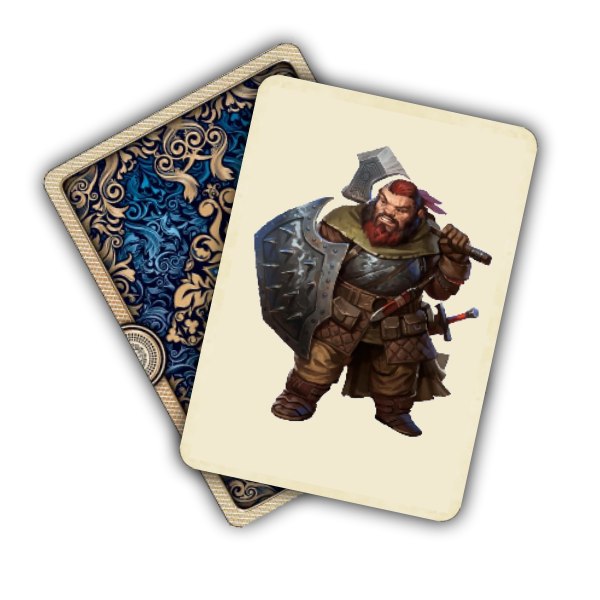
Kingdoms rich in ancient grandeur, halls carved into the roots of mountains, the echoing of picks and hammers in deep mines and blazing forges, a commitment to clan and tradition, and a burning hatred of goblins and orcs—these common threads unite all dwarves.
Your dwarf character has an assortment of inborn Abilities, part and parcel of dwarven Nature.
Ability Score Increase: Your Constitution score increases by 2.
Age: Dwarves mature at the same rate as Humans, but they’re considered young until they reach the age of 50. On average, they live about 350 years.
Alignment: Most Dwarves are lawful, believing firmly in the benefits of a well-ordered society. They tend toward good as well, with a strong sense of Fair Play and a belief that everyone deserves to share in the benefits of a just order.
Size: Dwarves stand between 4 and 5 feet tall and average about 150 pounds. Your size is Medium.
Speed: Your base walking speed is 25 feet. Your speed is not reduced by wearing Heavy Armor.
Darkvision: Accustomed to life Underground, you have superior vision in dark and dim Conditions. You can see in dim light within 60 feet of you as if it were bright light, and in Darkness as if it were dim light. You can’t discern color in Darkness, only Shades of Gray.
Dwarven Resilience: You have advantage on Saving Throws against poison, and you have Resistance against poison damage.
Dwarven Combat Training: You have proficiency with the Battleaxe, Handaxe, Light Hammer, and Warhammer.
Tool Proficiency: You gain proficiency with the artisan’s tools of your choice: smith’s tools, brewer’s supplies, or mason’s tools.
Stonecunning: Whenever you make an Intelligence (History) check related to the Origin of stonework, you are considered proficient in the History skill and add double your Proficiency Bonus to the check, instead of your normal Proficiency Bonus.
Languages: You can speak, read, and write Common and Dwarvish. Dwarvish is full of hard consonants and guttural sounds, and those characteristics spill over into whatever other language a dwarf might speak.
Subraces
Hill Dwarf
As a Hill Dwarf, you have keen Senses, deep intuition, and remarkable resilience.Ability Score Increase: Your Wisdom score increases by 1.
Dwarven Toughness: Your hit point maximum increases by 1, and it increases by 1 every time you gain a level.
Mountain Dwarf
Ability Score Increase: Your Strength score increases by 2.Dwarven Armor Training: You have proficiency with light and medium armor.
Underdark Dwarf
Ability Score Increase: Your Strength score increases by 1.Superior Darkvision: You can see in dim light within 120 feet of you as if it were bright light, and in darkness as if it were dim light. You can't discern color in darkness, only shades of gray.
Duergar Resilience: You have advantage on saving throws against illusions and against being charmed or paralyzed.
Duergar Magic: When you reach 3rd level, you can cast the Enlarge/Reduce spell on yourself once with this trait, using only the spell's enlarge option. When you reach 5th level, you can cast the Invisibility spell on yourself once with this trait. You don't need material components for either spell, and you can't cast them while you're in direct sunlight, although sunlight has no effect on them once cast. You regain the ability to cast these spells with this trait when you finish a long rest. Intelligence is your spellcasting ability for these spells.
Sunlight Sensitivity: You have disadvantage on Attack rolls and Wisdom (Perception) checks that rely on sight when you, the target of your attack, or whatever you are trying to perceive is in direct sunlight.
Attributes
Size: MediumSpeed: 25
Elf
Elf
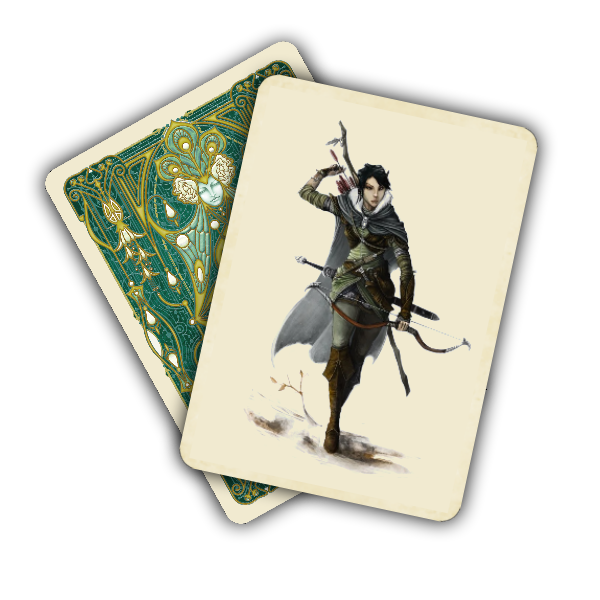
Elves are a magical people of otherworldly grace, living in places of ethereal beauty, in the midst of ancient forests or in silvery spires glittering with faerie light, where soft music drifts through the air and gentle fragrances waft on the breeze. Elves love nature and magic, art and artistry, music and poetry.
Your elf character has a variety of natural Abilities, the result of thousands of years of elven refinement.
Ability Score Increase: Your Dexterity score increases by 2.
Age: Although elves reach physical maturity at about the same age as Humans, the elven understanding of Adulthood goes beyond physical growth to encompass worldly experience. An elf typically claims Adulthood and an adult name around the age of 100 and can live to be 750 years old.
Alignment: Elves love freedom, variety, and self- expression, so they lean strongly toward the gentler aspects of chaos. They value and protect others’ freedom as well as their own, and they are more often good than not.
Size: Elves range from under 5 to over 6 feet tall and have slender builds. Your size is Medium.
Speed: Your base walking speed is 30 feet.
Darkvision: Accustomed to twilit forests and the night sky, you have superior vision in dark and dim Conditions. You can see in dim light within 60 feet of you as if it were bright light, and in Darkness as if it were dim light. You can’t discern color in Darkness, only Shades of Gray.
Keen Senses: You have proficiency in the Perception skill.
Fey Ancestry: You have advantage on Saving Throws against being Charmed, and magic can’t put you to sleep.
Trance: Elves don’t need to sleep. Instead, they meditate deeply, remaining semiconscious, for 4 hours a day. (The Common word for such meditation is “trance.”) While meditating, you can dream after a fashion; such dreams are actually mental exercises that have become reflexive through years of practice. After Resting in this way, you gain the same benefit that a human does from 8 hours of sleep.
Languages: You can speak, read, and write Common and Elvish. Elvish is fluid, with subtle intonations and intricate grammar. Elven literature is rich and varied, and their songs and poems are famous among other races. Many bards learn their language so they can add Elvish ballads to their repertoires.
Subraces
High Elf
As a High Elf, you have a Keen Mind and a mastery of at least the basics of magic. In many fantasy gaming worlds, there are two kinds of high elves. One type is haughty and reclusive, believing themselves to be superior to non-elves and even other elves. The other type is more Common and more friendly, and often encountered among Humans and other races.Ability Score Increase: Your Intelligence score increases by 1.
Elf Weapon Training: You have proficiency with the Longsword, Shortsword, Shortbow, and Longbow.
Cantrip: You know one cantrip of your choice from the Wizard spell list. Intelligence is your Spellcasting Ability for it.
Extra Language: You can speak, read, and write one extra language of your choice.
Dark Elf
Ability Score Increase: Your Charisma score increases by 1.Drow Magic: You know the Dancing Lights cantrip. When you reach 3rd level, you can cast Faerie Fire once, and it recharges after a long rest. When you reach 5th level, you can cast Darkness once, and it recharges after a long rest. Charisma is your spellcasting ability for these spells.
Drow Weapon Training: You have proficiency with rapiers, shortswords, and hand crossbows.
Superior Darkvision: Your darkvision has a range of 120 feet, instead of 60.
Sunlight Sensitivity: You have disadvantage on attack rolls and Wisdom (Perception) checks that rely on sight when you, the target of the attack, or whatever you are trying to perceive is in direct sunlight.
Eladrin
Eladrin are elves native to the Feywild, a realm of beauty, unpredictable emotion, and boundless magic. An eladrin is associated with one of the four seasons and has coloration reminiscent of that season, which can also affect the eladrin's mood:Some eladrin remain associated with a particular season for their entire lives, whereas other eladrin transform, adopting characteristics of a new season.
When finishing a long rest, any eladrin can change their season. An eladrin might choose the season that is present in the world or perhaps the season that most closely matches the eladrin's current emotional state. For example, an eladrin might shift to autumn if filled with contentment, another eladrin could change to winter if plunged into sorrow, still another might be bursting with joy and become an eladrin of spring, and fury might cause an eladrin to change to summer.
Ability Score Increase: Your Charisma score increases by 1.
Fey Step: As a bonus action, you can magically teleport up to 30 feet to an unoccupied space you can see. Once you use this trait, you can't do so again until you finish a short or long rest.
When you reach 3rd level, your Fey Step gains an additional effect based on your season; if the effect requires a saving throw, the DC equals 8 + your proficiency bonus + your Charisma modifier. The effects are as follows:
Sea Elf
Sea elves fell in love with the wild beauty of the ocean in the earliest days of the multiverse. While other elves traveled from realm to realm, the sea elves navigated the deepest currents and explored the waters across a hundred worlds. Today, they live in small, hidden communities in the ocean shallows and on the Elemental Plane of Water.Shadar-Kai
Sworn to the Raven Queen's service, the mysterious shadar-kai venture into the Material Plane from the Shadowfell to advance her will. Once they were fey like the rest of their elven kin, and now they exist in a strange state between life and death. Eladrin and shadar-kai are like reflections of each other: one bursting with emotion, the other nearly devoid of it.Ability Score Increase: Your Constitution score increases by 1.
Necrotic Resistance: You have resistance to necrotic damage.
Blessing of the Raven Queen: As a bonus action, you can magically teleport up to 30 feet to an unoccupied space you can see. Once you use this trait, you can't do so again until you finish a long rest.
Starting at 3rd level, you also gain resistance to all damage when you teleport using this trait. The resistance lasts until the start of your next turn. During that time, you appear ghostly and translucent.
Wood Elf
Ability Score Increase: Your Wisdom score increases by 1.Elf Weapon Training: You have proficiency with the longsword, shortsword, shortbow, and longbow.
Fleet of Foot: Your base walking speed increases to 35 feet.
Mask of the Wild: You can attempt to hide even when you are only lightly obscured by foliage, heavy rain, falling snow, mist, and other natural phenomena.
Pallid Elf
Ability Score Increase: Your Wisdom score increases by 1.Incisive Sense: You have advantage on Investigation and Insight checks.
Blessing of the Moonweaver: You know the Light cantrip. When you reach 3rd level, you can cast Sleep once, and it recharges after a long rest. When you reach 5th level, you can cast Invisibility (Self Only) once, and it recharges after a long rest. You do not need the material components required of the spells. Wisdom is your spellcasting ability for these spells.
Attributes
Size: MediumSpeed: 30
Gnome
Gnome
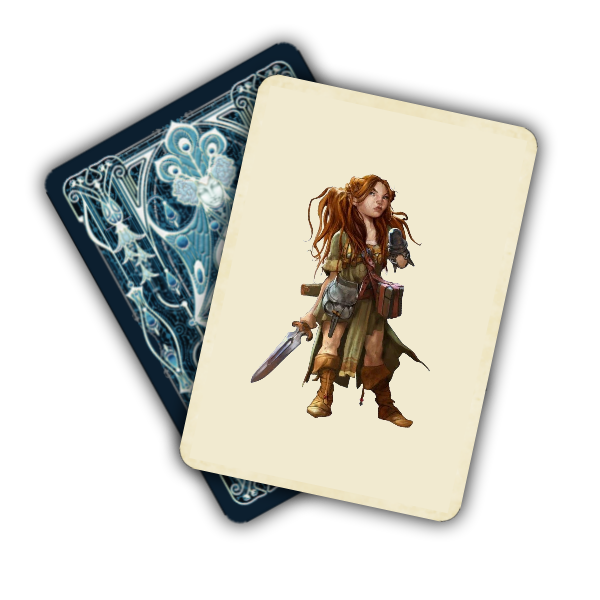
Gnomes make their homes in hilly, wooded lands. They live underground but get more fresh air than dwarves do, enjoying the natural, living world on the surface whenever they can. Their homes are well hidden by both clever construction and simple illusions.
Your gnome character has certain characteristics in Common with all other Gnomes.
Ability Score Increase: Your Intelligence score increases by 2.
Age: Gnomes mature at the same rate Humans do, and most are expected to settle down into an adult life by around age 40. They can live 350 to almost 500 years.
Alignment: Gnomes are most often good. Those who tend toward law are sages, engineers, researchers, scholars, investigators, or inventors. Those who tend toward chaos are minstrels, tricksters, wanderers, or fanciful jewelers. Gnomes are good-hearted, and even the tricksters among them are more playful than Vicious.
Size: Gnomes are between 3 and 4 feet tall and average about 40 pounds. Your size is Small.
Speed: Your base walking speed is 25 feet.
Darkvision: Accustomed to life Underground, you have superior vision in dark and dim Conditions. You can see in dim light within 60 feet of you as if it were bright light, and in Darkness as if it were dim light. You can’t discern color in Darkness, only Shades of Gray.
Gnome Cunning: You have advantage on all Intelligence, Wisdom, and Charisma Saving Throws against magic.
Languages: You can speak, read, and write Common and Gnomish. The Gnomish language, which uses the Dwarvish script, is renowned for its technical treatises and its catalogs of knowledge about the natural world.
Subraces
Forest Gnome
Ability Score Increase: Your Dexterity score increases by 1.Natural Illusionist: You know the Minor Illusion cantrip. Intelligence is your spellcasting modifier for it.
Speak with Small Beasts: Through sound and gestures, you may communicate simple ideas with Small or smaller beasts.
Rock Gnome
Ability Score Increase: Your Constitution score increases by 1.Artificer's Lore: Whenever you make an Intelligence (History) check related to magical, alchemical, or technological items, you can add twice your proficiency bonus instead of any other proficiency bonus that may apply.
Tinker: You have proficiency with artisan tools (tinker's tools). Using those tools, you can spend 1 hour and 10 gp worth of materials to construct a Tiny clockwork device (AC 5, 1 hp). The device ceases to function after 24 hours (unless you spend 1 hour repairing it to keep the device functioning), or when you use your action to dismantle it; at that time, you can reclaim the materials used to create it. You can have up to three such devices active at a time. When you create a device, choose one of the following options:
Attributes
Size: SmallSpeed: 25
Half-Elf
Half Elf
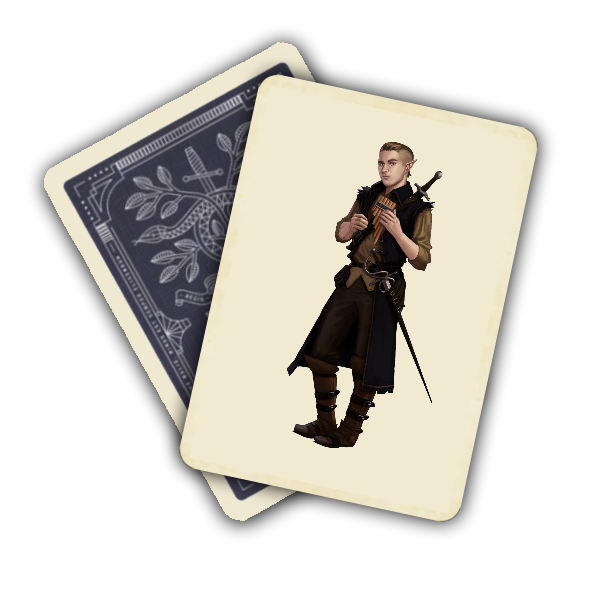
Half-elves share the chaotic bent of their elven heritage. They both value personal freedom and creative expression, demonstrating neither love of leaders nor desire for followers. They chafe at rules, resent others' demands, and sometimes prove unreliable, or at least unpredictable.
Your half-elf character has some qualities in Common with elves and some that are unique to Half-Elves.
Ability Score Increase: Your Charisma score increases by 2, and two other Ability Scores of your choice increase by 1.
Age: Half-Elves mature at the same rate Humans do and reach Adulthood around the age of 20. They live much longer than Humans, however, often exceeding 180 years.
Alignment: Half-Elves share the chaotic bent of their elven heritage. They value both personal freedom and creative expression, demonstrating neither love of leaders nor desire for followers. They chafe at rules, resent others’ demands, and sometimes prove unreliable, or at least unpredictable.
Size: Half-Elves are about the same size as Humans, ranging from 5 to 6 feet tall. Your size is Medium.
Speed: Your base walking speed is 30 feet.
Darkvision: Thanks to your elf blood, you have superior vision in dark and dim Conditions. You can see in dim light within 60 feet of you as if it were bright light, and in Darkness as if it were dim light. You can’t discern color in Darkness, only Shades of Gray.
Fey Ancestry: You have advantage on Saving Throws against being Charmed, and magic can’t put you to sleep.
Skill Versatility: You gain proficiency in two Skills of your choice.
Languages: You can speak, read, and write Common, Elvish, and one extra language of your choice.
Attributes
Size: MediumSpeed: 30
Halfling
Halfling
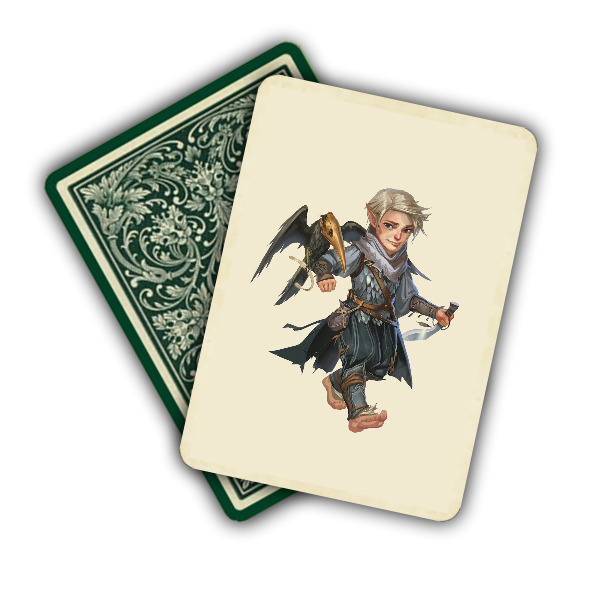
Halflings are an affable and cheerful people. They cherish the bonds of family and friendship as well as the comforts of hearth and home, harboring few dreams of gold or glory. Even adventurers among them usually venture into the world for reasons of community, friendship, wanderlust, or curiosity.
Your halfling character has a number of Traits in Common with all other Halflings.
Ability Score Increase: Your Dexterity score increases by 2.
Age: A halfling reaches Adulthood at the age of 20 and generally lives into the middle of his or her second century.
Alignment: Most Halflings are lawful good. As a rule, they are good-hearted and kind, hate to see others in pain, and have no tolerance for oppression. They are also very orderly and traditional, leaning heavily on the support of their community and the comfort of their old ways.
Size: Halflings average about 3 feet tall and weigh about 40 pounds. Your size is Small.
Speed: Your base walking speed is 25 feet.
Lucky: When you roll a 1 on The D20 for an Attack roll, ability check, or saving throw, you can reroll the die and must use the new roll.
Brave: You have advantage on Saving Throws against being Frightened.
Halfling Nimbleness: You can move through the space of any creature that is of a size larger than yours.
Languages: You can speak, read, and write Common and Halfling. The Halfling language isn’t Secret, but Halflings are loath to share it with others. They write very little, so they don’t have a rich body of literature. Their oral tradition, however, is very strong. Almost all Halflings speak Common to converse with the people in whose lands they dwell or through which they are traveling.
Subraces
Lightfoot Halfling
Ability Score Increase: Your Charisma score increases by 1.Naturally Stealthy: You can attempt to hide even when you are only obscured by a creature that is at least one size larger than you.
Stout Halfling
Ability Score Increase: Your Constitution score increases by 1.Stout Resilience: You have advantage on saving throws against poison, and you have resistance to poison damage.
Ghostwise Halfling
Ability Score Increase: Your Wisdom score increases by 1.Silent Speech: You can speak telepathically to any creature within 30 feet of you. The creature understands you only if the two of you share a language. You can speak telepathically in this way to one creature at a time.
Lotusden Halfling
Ability Score Increase: Your Wisdom score increases by 1.Children of the Woods: You know the Druidcraft Cantrip. At 3rd level, you can cast the Entangle spell once per long rest. At 5th level, you can cast Spike Growth spell once per long rest. These spells don't require the material components normally required. Wisdom is your spellcasting ability for these spells.
Timberwalk: Ability checks made to track you are at disadvantage and you can move through difficult terrain made of non-magical plants and overgrowth without expending extra movement.
Attributes
Size: SmallSpeed: 25
Half Orc
Half Orc
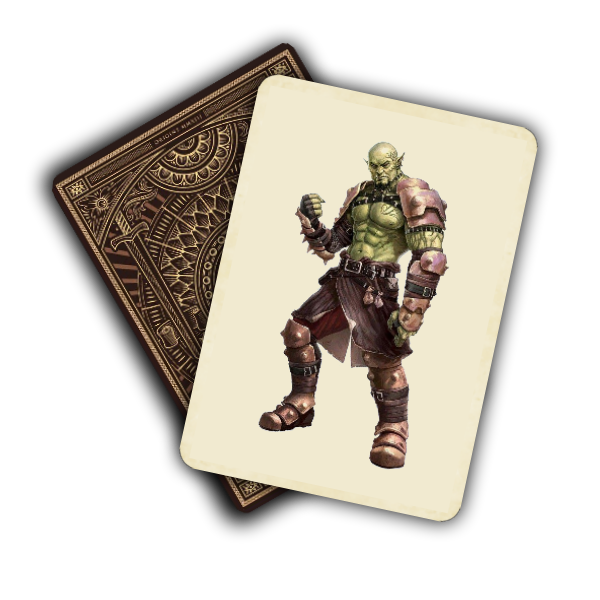
Half-orcs stand between 6 and 7 feet tall and usually weigh between 180 and 250 pounds. A half-orc's grayish pigmentation, sloping forehead, jutting jaw, prominent teeth, and coarse body hair make his lineage plain for all to see. Orcs like scars.
Your half-orc character has certain Traits deriving from your orc ancestry.
Ability Score Increase: Your Strength score increases by 2, and your Constitution score increases by 1.
Age: Half-Orcs mature a little faster than Humans, reaching Adulthood around age 14. They age noticeably faster and rarely live longer than 75 years.
Alignment: Half-Orcs inherit a tendency toward chaos from their orc Parents and are not strongly inclined toward good. Half-Orcs raised among orcs and willing to live out their lives among them are usually evil.
Size: Half-Orcs are somewhat larger and bulkier than Humans, and they range from 5 to well over 6 feet tall. Your size is Medium.
Speed: Your base walking speed is 30 feet.
Darkvision: Thanks to your orc blood, you have superior vision in dark and dim Conditions. You can see in dim light within 60 feet of you as if it were bright light, and in Darkness as if it were dim light. You can’t discern color in Darkness, only Shades of Gray.
Menacing: You gain proficiency in the Intimidation skill.
Relentless Endurance: When you are reduced to 0 Hit Points but not killed outright, you can drop to 1 hit point instead. You can’t use this feature again until you finish a Long Rest.
Savage Attacks: When you score a critical hit with a melee weapon Attack, you can roll one of the weapon’s damage dice one additional time and add it to the extra damage of the critical hit.
Languages: You can speak, read, and write Common and Orc. Orc is a harsh, grating language with hard consonants. It has no script of its own but is written in the Dwarvish script.
Attributes
Size: MediumSpeed: 30
Human
Human
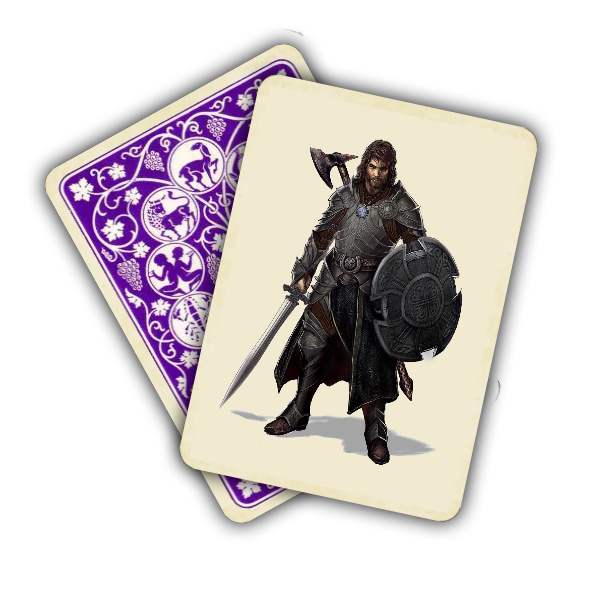
Humans who seek adventure are the most daring and ambitious members of a daring and ambitious race. They seek to earn glory in the eyes of their fellows by amassing power, wealth, and fame. More than other people, humans champion causes rather than territories or groups.
It’s hard to make generalizations about Humans, but your human character has these Traits.
Ability Score Increase: Your Ability Scores each increase by 1.
Age: Humans reach Adulthood in their late teens and live less than a century.
Alignment: Humans tend toward no particular Alignment. The best and the worst are found among them.
Size: Humans vary widely in height and build, from barely 5 feet to well over 6 feet tall. Regardless of your position in that range, your size is Medium.
Speed: Your base walking speed is 30 feet.
Languages: You can speak, read, and write Common and one extra language of your choice. Humans typically learn the Languages of other peoples they deal with, including obscure dialects. They are fond of sprinkling their Speech with words borrowed from other tongues: Orc curses, Elvish musical expressions, Dwarvish Military phrases, and so on.
Subraces
Standard Human
Ability Score Increase: Your ability scores each increase by 1.Variant Human
Ability Score Increase: Two different ability scores of your choice increase by 1.Skills: You gain proficiency in one skill of your choice.
Feat: You gain one Feat of your choice.
Attributes
Size: MediumSpeed: 30
Tiefling
Tiefling
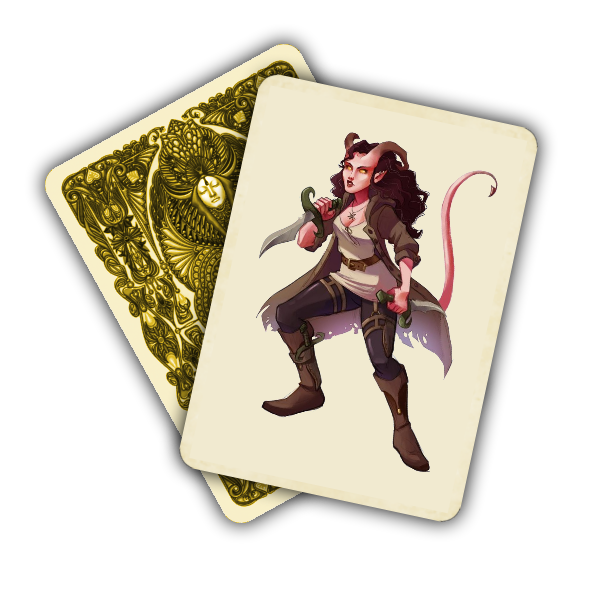
Tiefling hair, which starts behind their horns, ranges from dark blue to purple to red in addition to more normal human colors. Within the setting of Dungeons & Dragons 5th Edition, tieflings are characterized as charismatic and self-reliant, and make excellent warlocks, warlords, and wizards.
Tieflings share certain Racial Traits as a result of their Infernal descent.
Ability Score Increase: Your Intelligence score increases by 1, and your Charisma score increases by 2.
Age: Tieflings mature at the same rate as Humans but live a few years longer.
Alignment: Tieflings might not have an innate tendency toward evil, but many of them end up there. Evil or not, an independent Nature inclines many Tieflings toward a chaotic Alignment.
Size: Tieflings are about the same size and build as Humans. Your size is Medium.
Speed: Your base walking speed is 30 feet.
Darkvision: Thanks to your Infernal heritage, you have superior vision in dark and dim Conditions. You can see in dim light within 60 feet of you as if it were bright light, and in Darkness as if it were dim light. You can’t discern color in Darkness, only Shades of Gray.
Hellish Resistance: You have Resistance to fire damage.
Infernal Legacy: You know the Thaumaturgy cantrip. When you reach 3rd Level, you can cast the Hellish Rebuke spell as a 2nd-level spell once with this trait and regain the ability to do so when you finish a Long Rest. When you reach 5th Level, you can cast the Darkness spell once with this trait and regain the ability to do so when you finish a Long Rest. Charisma is your Spellcasting Ability for these Spells.
Languages: You can speak, read, and write Common and Infernal.
Subraces
Bloodline of Asmodeus
The tieflings connected to Nessus command the power of fire and darkness, guided by a keener than normal intellect, as befits those linked to Asmodeus himself.Ability Score Increase: Your Intelligence score increases by 1.
Infernal Legacy: You know the Thaumaturgy cantrip. Once you reach 3rd level, you can cast the Hellish Rebuke spell once as a 2nd-level spell. Once you reach 5th level, you can also cast the Darkness spell once. You must finish a long rest to cast these spells again with this trait. Charisma is your spellcasting ability for these spells.
Bloodline of Baalzebul
The crumbling realm of Maladomini is ruled by Baalzebul, who excels at corrupting those whose minor sins can be transformed into acts of damnation. Tieflings linked to this archdevil can corrupt others both physically and psychically.Ability Score Increase: Your Intelligence score increases by 1.
Legacy of Maladomini: You know the Thaumaturgy cantrip. Once you reach 3rd level, you can cast the Ray of Sickness spell once as a 2nd-level spell. Once you reach 5th level, you can also cast the Crown of Madness spell once. You must finish a long rest to cast these spells again with this trait. Charisma is your spellcasting ability for these spells.
Devil's Tongue Bloodline
Aside from their raw physical and arcane power, many types of devils possess the means to warp and affect the attention of others. Tieflings may inherit some of these traits from a manipulative devilish ancestor.Ability Score Increase: Your Intelligence score increases by 1.
Devil's Tongue: You know the Vicious Mockery cantrip. Once you reach 3rd level, you can cast the Charm Person spell once as a 2nd-level spell. Once you reach 5th level, you can also cast the Enthrall spell once. You must finish a long rest to cast these spells again with this trait. Charisma is your spellcasting ability for these spells.
Bloodline of Dispater
The great city of Dis occupies most of Hell's second layer. It is a place where secrets are uncovered and shared with the highest bidder, making tieflings tied to Dispater excellent spies and infiltrators.Ability Score Increase: Your Dexterity score increases by 1.
Legacy of Dis: You know the Thaumaturgy cantrip. Once you reach 3rd level, you can cast the Disguise Self spell once as a 2nd-level spell. Once you reach 5th level, you can also cast the Detect Thoughts spell once. You must finish a long rest to cast these spells again with this trait. Charisma is your spellcasting ability for these spells.
Bloodline of Fierna
A master manipulator, Fierna grants tieftings tied to her forceful personalities.Ability Score Increase: Your Wisdom score increases by 1.
Legacy of Phlegethos: You know the Friends cantrip. Once you reach 3rd level, you can cast the Charm Person spell once as a 2nd-level spell. Once you reach 5th level, you can also cast the Suggestion spell once. You must finish a long rest to cast these spells again with this trait. Charisma is your spellcasting ability for these spells.
Bloodline of Glasya
Glasya, Hell's criminal mastermind, grants her tiefiings magic that is useful for committing heists.Ability Score Increase: Your Dexterity score increases by 1.
Legacy of Malbolge: You know the Minor Illusion cantrip. Once you reach 3rd level, you can cast the Disguise Self spell once as a 2nd-level spell. Once you reach 5th level, you can also cast the Invisibility spell once as a 3rd-level spell. You must finish a long rest to cast these spells again with this trait. Charisma is your spellcasting ability for these spells.
Bloodline of Levistus
Frozen Stygia is ruled by Levistus, an archdevil known for offering bargains to those who face an inescapable doom.Ability Score Increase: Your Constitution score increases by 1.
Legacy of Stygia: You know the Ray of Frost cantrip. Once you reach 3rd level, you can cast the Armor of Agathys spell once as a 2nd-level spell. Once you reach 5th level, you can also cast the Darkness spell once. You must finish a long rest to cast these spells again with this trait. Charisma is your spellcasting ability for these spells.
Bloodline of Mammon
The great miser Mammon loves coins above all else. Tieflings tied to him excel at gathering and safeguarding wealth.Ability Score Increase: Your Intelligence score increases by 1.
Legacy of Minauros: You know the Mage Hand cantrip. Once you reach 3rd level, you can cast the Tenser's Floating Disk spell once as a 2nd-level spell. Once you reach 5th level, you can also cast the Arcane Lock spell once. You must finish a long rest to cast these spells again with this trait. Charisma is your spellcasting ability for these spells.
Bloodline of Mephistopheles
In the frozen realm of Cania, Mephistopheles offers arcane power to those who entreat with him. Tieflings linked to him master some arcane magic.Ability Score Increase: Your Intelligence score increases by 1.
Legacy of Cania: You know the Mage Hand cantrip. Once you reach 3rd level, you can cast the Burning Hands spell once as a 2nd-level spell. Once you reach 5th level, you can also cast the Flame Blade spell once as a 3rd-level spell. You must finish a long rest to cast these spells again with this trait. Charisma is your spellcasting ability for these spells.
Winged Bloodline
Rather than magic, certain tieflings inherit the leathery wings of their devilish ancestors.Ability Score Increase: Your Intelligence score increases by 1.
Winged: You have bat-like wings sprouting from your shoulders. You have a flying speed of 30 feet while you aren’t wearing heavy armor.
Bloodline of Zariel
Tieflings with a blood tie to Zariel are stronger than the typical tiefling and receive magical abilities that aid them in battle.Ability Score Increase: Your Strength score increases by 1.
Legacy of Avernus: You know the Thaumaturgy cantrip. Once you reach 3rd level, you can cast the Searing Smite spell once as a 2nd-level spell. Once you reach 5th level, you can also cast the Branding Smite spell once as a 3rd-level spell. You must finish a long rest to cast these spells again with this trait. Charisma is your spellcasting ability for these spells.
Attributes
Size: MediumSpeed: 30
Artificer
Artificer

Masters of unlocking magic in everyday objects, artificers are supreme inventors.
They see magic as a complex system waiting to be decoded and controlled.
Artificers use tools to channel arcane power, crafting temporary and permanent magical objects.
You must have an Intelligence score of 13 or higher in order to multiclass in or out of this class.
As an artificer, you gain the following class features.
They see magic as a complex system waiting to be decoded and controlled.
Artificers use tools to channel arcane power, crafting temporary and permanent magical objects.
You must have an Intelligence score of 13 or higher in order to multiclass in or out of this class.
As an artificer, you gain the following class features.
Hit Points
Hit Dice:Proficiencies
Armor: Light Armor, Medium Armor, ShieldsWeapons: Simple Weapons, Hand crossbows, Heavy crossbows
Tools: Thieves’ tools, tinker’s tools, one type of artisan’s tools of your choice
Saving Throws: Constitution, Intelligence
Skills: Choose two from Arcana, History, Investigation, Medicine, Nature, Perception, Sleight of Hand
Equipment
You start with the following equipment, in addition to the equipment granted by your background:| spell slots per Spell Level | ||||||||||
| Level | Prof Bonus | Features | Infusions Known | Infused Items | Cantrips | 1st | 2nd | 3rd | 4th | 5th |
| 1st | +2 | Magical Tinkering, Spellcasting | - | - | 2 | 2 | - | - | - | - |
| 2nd | +2 | Infuse Item | 4 | 2 | 2 | 2 | - | - | - | - |
| 3rd | +2 | Artificer Specialist, The Right Tool for the Job | 4 | 2 | 2 | 3 | - | - | - | - |
| 4th | +2 | Ability Score Improvement | 4 | 2 | 2 | 3 | - | - | - | - |
| 5th | +3 | Artificer Specialist feature | 4 | 2 | 2 | 4 | 2 | - | - | - |
| 6th | +3 | Tool Expertise | 6 | 3 | 2 | 4 | 2 | - | - | - |
| 7th | +3 | Flash of Genius | 6 | 3 | 2 | 4 | 3 | - | - | - |
| 8th | +3 | Ability Score Improvement | 6 | 3 | 2 | 4 | 3 | - | - | - |
| 9th | +4 | Artificer Specialist feature | 6 | 3 | 2 | 4 | 3 | 2 | - | - |
| 10th | +4 | Magic Item Adept | 8 | 4 | 3 | 4 | 3 | 2 | - | - |
| 11th | +4 | Spell-Storing Item | 8 | 4 | 3 | 4 | 3 | 3 | - | - |
| 12th | +4 | Ability Score Improvement | 8 | 4 | 3 | 4 | 3 | 3 | - | - |
| 13th | +5 | - | 8 | 4 | 3 | 4 | 3 | 3 | 1 | - |
| 14th | +5 | Magic Item Savant | 10 | 5 | 4 | 4 | 3 | 2 | 1 | - |
| 15th | +5 | Artificer Specialist feature | 10 | 5 | 4 | 4 | 3 | 3 | 2 | - |
| 16th | +5 | Ability Score Improvement | 10 | 5 | 4 | 4 | 3 | 3 | 2 | - |
| 17th | +6 | - | 10 | 5 | 4 | 4 | 3 | 3 | 3 | 1 |
| 18th | +6 | Magic Item Master | 12 | 6 | 4 | 4 | 3 | 3 | 3 | 1 |
| 19th | +6 | Ability Score Improvement | 12 | 6 | 4 | 4 | 3 | 3 | 3 | 2 |
| 20th | +6 | Soul of Artifice | 12 | 6 | 4 | 4 | 3 | 3 | 3 | 2 |
At 1st level, you learn how to invest a spark of magic in objects that would otherwise be mundane. To use this ability, you must tinker’s tools, or other artisan’s tools in hand. You then touch a Tiny nonmagical object as an action and give it one of the following magical properties of your choice:
You can give the magic of this feature to multiple objects, touching one object each time you use the feature, and a single object can bear only one of the properties at a time. The maximum number of objects you can affect with the feature at one time is equal to your Intelligence modifier (minimum of one object). If you try to exceed your maximum, the oldest property immediately ends, and then the new property applies.
Spellcasting
You have studied the workings of magic, how to channel it through objects, and how to awaken it within them. As a result, you have gained a limited ability to cast spells. To observers, you don’t appear to be casting spells in a conventional way; you look as if you’re producing wonders through various items.
After you gain the Infuse Item feature at 2nd level, you can also use any item bearing one of your infusions as a spellcasting focus.
When you gain a level in this class, you can replace one of the artificer cantrips you know with another cantrip from the artificer spell list.
You prepare the list of artificer spells that are available for you to cast, choosing from the artificer spell list. When you do so, choose a number of artificer spells equal to your Intelligence modifier + half your artificer level, rounded down (minimum of one spell). The spells must be of a level for which you have spell slots.
For example, if you are a 5th-level artificer, you have four 1st-level and two 2nd-level spell slots. With an Intelligence of 14, your list of prepared spells can include four spells of 1st or 2nd level, in any combination. If you prepare the 1st-level spell Cure Wounds, you can cast it using a 1st-level or a 2nd-level slot. Casting the spell doesn’t remove it from your list of prepared spells.
You can change your list of prepared spells when you finish a long rest. Preparing a new list of artificer spells requires time spent in tinkering with your spellcasting focuses: at least 1 minute per spell level for each spell on your list.
Spell save DC = 8 + your proficiency bonus + your Intelligence modifier
Spell attack modifier = your proficiency bonus + your Intelligence modifier
Infuse Item
At 2nd level, you gain the ability to imbue mundane items with certain magical infusions. The magic items you create with this feature are effectively prototypes of permanent items.
Whenever you gain a level in this class, you can replace one of the artificer infusions you learned with a new one.
Your infusion remains in an item indefinitely, but when you die, the infusion vanishes after a number of days have passed equal to your Intelligence modifier (minimum of 1 day). The infusion also vanishes if you give up your knowledge of the infusion for another one.
You can infuse more than one nonmagical object at the end of a long rest; the maximum number of objects appears in the Infused Items column of the Artificer table. You must touch each of the objects, and each of your infusions can be in only one object at a time. Moreover, no object can bear more than one of your infusions at a time. If you try to exceed your maximum number of infusions, the oldest infusion immediately ends, and then the new infusion applies.
Artificer Specialist
At 3rd level, you choose the type of specialist you are. Your choice grants you features at 5th level and again at 9th and 15th level.The Right Tool for the Job
At 3rd level, you learn how to produce exactly the tool you need: with tinker's tools in hand, you can magically create one set of artisan's tools in an unoccupied space within 5 feet of you. This creation requires 1 hour of uninterrupted work, which can coincide with a short or long rest. Though the product of magic, the tools are nonmagical, and they vanish when you use this feature again.
Ability Score Improvement
When you reach 4th level, 8th, 12th, 16th, and 19th level, you can increase one ability score of your choice by 2, or you can increase two ability scores of your choice by 1. As normal, you can't increase an ability score above 20 using this feature.
Tool Expertise
Starting at 6th level, your proficiency bonus is doubled for any ability check you make that uses your proficiency with a tool.
Flash of Genius
Starting at 7th level, you gain the ability to come up with solutions under pressure. When you or another creature you can see within 30 feet of you makes an ability check or a saving throw, you can use your reaction to add your Intelligence modifier to the roll.
You can use this feature a number of times equal to your Intelligence modifier (minimum of once). You regain all expended uses when you finish a long rest.
Magic Item Adept
When you reach 10th level, you achieve a profound understanding of how to use and make magic items:
Spell-Storing Item
At 11th level, you learn how to store a spell in an object. Whenever you finish a long rest, you can touch one simple or martial weapon or one item that you can use as a spellcasting focus and store a spell in it, choosing one 1st- or 2nd-level spell from the artificer spell list that requires 1 action to cast (you needn't to have it prepared).
While holding the object, a creature can take an action to produce the spell's effect from it using your spellcasting ability modifier. If the spell requires concentration, that creature must concentrate.
The spell stays in the object until it has been used a number of times equal to twice your Intelligence modifier (minimum of twice) or until you use this feature again to store a spell in an object.
Magic Item Savant
At 14th level, your skill with magic items deepens more:
Magic Item Master
Starting at 18th level, you can attune up to six magic items at once.
Soul of Artifice
At 20th level, you develop a mystical connection to your magic items, which you can draw on for protection:
Barbarian
Barbarian

People of towns and cities take pride in how their civilized ways set them apart from animals, as if denying one’s own nature was a mark of superiority. To a barbarian, though, civilization is no virtue, but a sign of weakness. The strong embrace their animal nature—keen instincts, primal physicality, and ferocious rage. Barbarians are uncomfortable when hedged in by walls and crowds. They thrive in the wilds of their homelands: the tundra, jungle, or grasslands where their tribes live and hunt.
Barbarians come alive in the chaos of combat. They can enter a berserk state where rage takes over, giving them superhuman strength and resilience. A barbarian can draw on this reservoir of fury only a few times without resting, but those few rages are usually sufficient to defeat whatever threats arise.
You must have a Strength score of 13 or higher in order to multiclass in or out of this class.
As a barbarian, you gain the following Class Features.
Barbarians come alive in the chaos of combat. They can enter a berserk state where rage takes over, giving them superhuman strength and resilience. A barbarian can draw on this reservoir of fury only a few times without resting, but those few rages are usually sufficient to defeat whatever threats arise.
You must have a Strength score of 13 or higher in order to multiclass in or out of this class.
As a barbarian, you gain the following Class Features.
Hit Points
Hit Dice:Proficiencies
Armor: Light Armor, Medium Armor, ShieldsWeapons: Simple Weapons, Martial Weapons
Tools: None
Saving Throws: Strength, Constitution
Skills: Choose two from Animal Handling, Athletics, Intimidation, Nature, Perception, and Survival
Equipment
You start with the following Equipment, in addition to the Equipment granted by your background:| Level | Prof Bonus | Features | Rages | Rage Damage |
| 1st | +2 | Rage, Unarmored Defense | 2 | +2 |
| 2nd | +2 | Reckless Attack, Danger Sense | 2 | +2 |
| 3rd | +2 | Primal Path | 3 | +2 |
| 4th | +2 | Ability Score Improvement | 3 | +2 |
| 5th | +3 | Extra Attack, Fast Movement | 3 | +2 |
| 6th | +3 | Path feature | 4 | +2 |
| 7th | +3 | Feral Instinct | 4 | +2 |
| 8th | +3 | Ability Score Improvement | 4 | +2 |
| 9th | +4 | Brutal Critical (1 die) | 4 | +3 |
| 10th | +4 | Path feature | 4 | +3 |
| 11th | +4 | Relentless Rage | 4 | +3 |
| 12th | +4 | Ability Score Improvement | 5 | +3 |
| 13th | +5 | Brutal Critical (2 dice) | 5 | +3 |
| 14th | +5 | Path feature | 5 | +3 |
| 15th | +5 | Persistent Rage | 5 | +3 |
| 16th | +5 | Ability Score Improvement | 5 | +4 |
| 17th | +6 | Brutal Critical (3 dice) | 6 | +4 |
| 18th | +6 | Indomitable Might | 6 | +4 |
| 19th | +6 | Ability Score Improvement | 6 | +4 |
| 20th | +6 | Primal Champion | Unlimited | +4 |
In battle, you fight with primal ferocity. On Your Turn, you can enter a rage as a Bonus Action.
While raging, you gain the following benefits if you aren't wearing heavy armor:
If you are able to cast Spells, you can't cast them or concentrate on them while raging.
Your rage lasts for 1 minute. It ends early if you are knocked Unconscious or if Your Turn ends and you haven't attacked a Hostile creature since your last turn or taken damage since then. You can also end your rage on Your Turn as a Bonus Action.
Once you have raged the maximum number of times for your Barbarian level, you must finish a Long Rest before you can rage again. You may rage 2 times at 1st Level, 3 at 3rd, 4 at 6th, 5 at 12th, and 6 at 17th.
Unarmored Defense
While you are not wearing any armor, your Armor Class equals 10 + your Dexterity modifier + your Constitution modifier. You can use a Shield and still gain this benefit.
Danger Sense
At 2nd Level, you gain an uncanny sense of when things nearby aren't as they should be, giving you an edge when you dodge away from danger. You have advantage on Dexterity Saving Throws against Effects that you can see, such as traps and Spells. To gain this benefit, you can't be Blinded, Deafened, or Incapacitated.
Reckless Attack
Starting at 2nd Level, you can throw aside all concern for Defense to Attack with fierce desperation. When you make your first Attack on Your Turn, you can decide to Attack recklessly. Doing so gives you advantage on melee weapon Attack rolls using Strength during this turn, but Attack rolls against you have advantage until your next turn.
Primal Path
At 3rd Level, you choose a path that shapes the Nature of your rage, such as the Path of the Berserker. Your choice grants you features at 3rd Level and again at 6th, 10th, and 14th levels.
Ability Score Improvement
When you reach 4th Level, and again at 8th, 12th, 16th, and 19th level, you can increase one ability score of your choice by 2, or you can increase two Ability Scores of your choice by 1. As normal, you can’t increase an ability score above 20 using this feature.
Extra Attack
Beginning at 5th Level, you can Attack twice, instead of once, whenever you take the Attack action on Your Turn.
Fast Movement
Starting at 5th Level, your speed increases by 10 feet while you aren't wearing Heavy Armor.
Feral Instinct
By 7th level, your instincts are so honed that you have advantage on Initiative rolls.
Additionally, if you are surprised at the beginning of Combat and aren't Incapacitated, you can act normally on your first turn, but only if you enter your rage before doing anything else on that turn.
Brutal Critical
Beginning at 9th level, you can roll one additional weapon damage die when determining the extra damage for a critical hit with a melee Attack.
This increases to two additional dice at 13th level and three additional dice at 17th level.
Relentless Rage
Starting at 11th level, your rage can keep you fighting despite grievous wounds. If you drop to 0 Hit Points while you're raging and don't die outright, you can make a DC 10 Constitution saving throw. If you succeed, you drop to 1 hit point instead.
Each time you use this feature after the first, the DC increases by 5. When you finish a short or Long Rest, the DC resets to 10.
Persistent Rage
Beginning at 15th level, your rage is so fierce that it ends early only if you fall Unconscious or if you choose to end it.
Indomitable Might
Beginning at 18th level, if your total for a Strength check is less than your Strength score, you can use that score in place of the total.
Primal Champion
At 20th level, you embody the power of the wilds. Your Strength and Constitution scores increase by 4. Your maximum for those scores is now 24.
Primal Paths
Attributes
Hit Die: d12Starting Gold: 2d4 x 10
Subclass Name: Primal Path
Suggested Abilities: Strength, Constitution
Bard
Bard

In the worlds of D&D, words and music are not just vibrations of air, but vocalizations with power all their own. The bard is a master of song, speech, and the magic they contain. Bards say that the multiverse was spoken into existence, that the words of the gods gave it shape, and that echoes of these primordial Words of Creation still resound throughout the cosmos. The music of bards is an attempt to snatch and harness those echoes, subtly woven into their spells and powers.
The greatest strength of bards is their sheer versatility. Many bards prefer to stick to the sidelines in combat, using their magic to inspire their allies and hinder their foes from a distance. But bards are capable of defending themselves in melee if necessary, using their magic to bolster their swords and armor. Their spells lean toward charms and illusions rather than blatantly destructive spells. They have a wide-ranging knowledge of many subjects and a natural aptitude that lets them do almost anything well. Bards become masters of the talents they set their minds to perfecting, from musical performance to esoteric knowledge.
You must have a Charisma score of 13 or higher in order to multiclass in or out of this class.
As a bard, you gain the following Class Features.
The greatest strength of bards is their sheer versatility. Many bards prefer to stick to the sidelines in combat, using their magic to inspire their allies and hinder their foes from a distance. But bards are capable of defending themselves in melee if necessary, using their magic to bolster their swords and armor. Their spells lean toward charms and illusions rather than blatantly destructive spells. They have a wide-ranging knowledge of many subjects and a natural aptitude that lets them do almost anything well. Bards become masters of the talents they set their minds to perfecting, from musical performance to esoteric knowledge.
You must have a Charisma score of 13 or higher in order to multiclass in or out of this class.
As a bard, you gain the following Class Features.
Hit Points
Hit Dice:Proficiencies
Armor: Light armorWeapons: Simple weapons, hand crossbows, longswords, rapiers, shortswords
Tools: Three musical instruments of your choice
Saving Throws: Dexterity, Charisma
Skills: Choose any three
Equipment
You start with the following equipment, in addition to the equipment granted by your background:| Spell Slots per Spell Level | |||||||||||||
| Level | Prof Bonus | Features | Cantrips | Spells | 1st | 2nd | 3rd | 4th | 5th | 6th | 7th | 8th | 9th |
| 1st | +2 | Spellcasting, Bardic Inspiration (d6) | 2 | 4 | 2 | - | - | - | - | - | - | - | - |
| 2nd | +2 | Jack of All Trades, Song of Rest (d6) | 2 | 5 | 3 | - | - | - | - | - | - | - | - |
| 3rd | +2 | Bard College, Expertise | 2 | 6 | 4 | 2 | - | - | - | - | - | - | - |
| 4th | +2 | Ability Score Improvement | 3 | 7 | 4 | 3 | - | - | - | - | - | - | - |
| 5th | +3 | Bardic Inspiration (d8), Font of Inspiration | 3 | 8 | 4 | 3 | 2 | - | - | - | - | - | - |
| 6th | +3 | Countercharm, Bard College feature | 3 | 9 | 4 | 3 | 3 | - | - | - | - | - | - |
| 7th | +3 | 3 | 10 | 4 | 3 | 3 | 1 | - | - | - | - | - | |
| 8th | +3 | Ability Score Improvement | 3 | 11 | 4 | 3 | 3 | 2 | - | - | - | - | - |
| 9th | +4 | Song of Rest (d8) | 3 | 12 | 4 | 3 | 3 | 3 | 1 | - | - | - | - |
| 10th | +4 | Bardic Inspiration (d10), Expertise, Magical Secrets | 4 | 14 | 4 | 3 | 3 | 3 | 2 | - | - | - | - |
| 11th | +4 | 4 | 15 | 4 | 3 | 3 | 3 | 2 | 1 | - | - | - | |
| 12th | +4 | Ability Score Improvement | 4 | 15 | 4 | 3 | 3 | 3 | 2 | 1 | - | - | - |
| 13th | +5 | Song of Rest (d10) | 4 | 16 | 4 | 3 | 3 | 3 | 2 | 1 | 1 | - | - |
| 14th | +5 | Magical Secrets, Bard College feature | 4 | 18 | 4 | 3 | 3 | 3 | 2 | 1 | 1 | - | - |
| 15th | +5 | Bardic Inspiration (d12) | 4 | 19 | 4 | 3 | 3 | 3 | 2 | 1 | 1 | 1 | - |
| 16th | +5 | Ability Score Improvement | 4 | 19 | 4 | 3 | 3 | 3 | 2 | 1 | 1 | 1 | - |
| 17th | +6 | Song of Rest (d12) | 4 | 20 | 4 | 3 | 3 | 3 | 2 | 1 | 1 | 1 | 1 |
| 18th | +6 | Magical Secrets | 4 | 22 | 4 | 3 | 3 | 3 | 3 | 1 | 1 | 1 | 1 |
| 19th | +6 | Ability Score Improvement | 4 | 22 | 4 | 3 | 3 | 3 | 3 | 2 | 1 | 1 | 1 |
| 20th | +6 | Superior Inspiration | 4 | 22 | 4 | 3 | 3 | 3 | 3 | 2 | 2 | 1 | 1 |
Cantrips: You know two cantrips of your choice from the bard spell list. You learn additional bard cantrips of your choice at higher levels, as shown in the Cantrips Known column of the Bard table.
Spell Slots: The Bard table shows how many spell slots you have to cast your spells of 1st level and higher. To cast one of these spells, you must expend a slot of the spell's level or higher. You regain all expended spell slots when you finish a long rest. For example, if you know the 1st-level spell Cure Wounds and have a 1st-level and a 2nd-level spell slot available, you can cast Cure Wounds using either slot.
The Spells Known column of the Bard table shows when you learn more bard spells of your choice. Each of these spells must be of a level for which you have spell slots, as shown on the table. For instance, when you reach 3rd level in this class, you can learn one new spell of 1st or 2nd level.
Additionally, when you gain a level in this class, you can choose one of the bard spells you know and replace it with another spell from the bard spell list, which also must be of a level for which you have spell slots.
Spellcasting Ability: Charisma is your spellcasting ability for your bard spells. Your magic comes from the heart and soul you pour into the performance of your music or oration. You use your Charisma whenever a spell refers to your spellcasting ability. In addition, you use your Charisma modifier when setting the saving throw DC for a bard spell you cast and when making an attack roll with one.
Spell save DC: = 8 + your proficiency bonus + your Charisma modifier
Spell attack modifier: = your proficiency bonus + your Charisma modifier
Ritual Casting: You can cast any bard spell you know as a ritual if that spell has the ritual tag.
Spellcasting Focus: You can use a musical instrument (found in chapter 5) as a spellcasting focus for your bard spells.
Bardic Inspiration
You can inspire others through stirring words or music. To do so, you use a bonus action on your turn to choose one creature other than yourself within 60 feet of you who can hear you. That creature gains one Bardic Inspiration die, a d6.
Once within the next 10 minutes, the creature can roll the die and add the number rolled to one ability check, attack roll, or saving throw it makes. The creature can wait until after it rolls the d20 before deciding to use the Bardic Inspiration die, but must decide before the DM says whether the roll succeeds or fails. Once the Bardic Inspiration die is rolled, it is lost. A creature can have only one Bardic Inspiration die at a time.
You can use this feature a number of times equal to your Charisma modifier (a minimum of once). You regain any expended uses when you finish a long rest.
Your Bardic Inspiration die changes when you reach certain levels in this class. The die becomes a d8 at 5th level, a d10 at 10th level, and a d12 at 15th level.
Jack of All Trades
Starting at 2nd level, you can add half your proficiency bonus, rounded down, to any ability check you make that doesn't already include your proficiency bonus.
Song of Rest
Beginning at 2nd level, you can use soothing music or oration to help revitalize your wounded allies during a short rest. If you or any friendly creatures who can hear your performance spend one or more Hit Dice to regain hit points at the end of the short rest, each of those creatures regains an extra 1d6 hit points.
Bard College
At 3rd level, you delve into the advanced techniques of a bard college of your choice:Expertise
At 3rd level, choose two of your skill proficiencies. Your proficiency bonus is doubled for any ability check you make that uses either of the chosen proficiencies.
At 10th level, you can choose another two skill proficiencies to gain this benefit.
Ability Score Improvement
When you reach 4th level, and again at 8th, 12th, 16th, and 19th level, you can increase one ability score of your choice by 2, or you can increase two ability scores of your choice by 1. As normal, you can't increase an ability score above 20 using this feature.
Font of Inspiration
Beginning when you reach 5th level, you regain all of your expended uses of Bardic Inspiration when you finish a short or long rest.
Countercharm
At 6th level, you gain the ability to use musical notes or words of power to disrupt mind-influencing effects. As an action, you can start a performance that lasts until the end of your next turn. During that time, you and any friendly creatures within 30 feet of you have advantage on saving throws against being frightened or charmed. A creature must be able to hear you to gain this benefit. The performance ends early if you are incapacitated or silenced or if you voluntarily end it (no action required).
Magical Secrets
By 10th level, you have plundered magical knowledge from a wide spectrum of disciplines. Choose two spells from any class, including this one. A spell you choose must be of a level you can cast, as shown on the Bard table, or a cantrip.
The chosen spells count as bard spells for you and are included in the number in the Spells Known column of the Bard table.
You learn two additional spells from any class at 14th level and again at 18th level.
Superior Inspiration
At 20th level, when you roll initiative and have no uses of Bardic Inspiration left, you regain one use.
Attributes
Hit Die: d8Spellcasting Ability: Charisma
Starting Gold: 5d4 x 10
Subclass Name: Bard College
Suggested Abilities: Charisma, Dexterity
Cleric
Cleric

Divine magic, as the name suggests, is the power of the gods, flowing from them into the world. Clerics are conduits for that power, manifesting it as miraculous effects. The gods don’t grant this power to everyone who seeks it, but only to those chosen to fulfill a high calling.
Harnessing divine magic doesn’t rely on study or training. A cleric might learn formulaic prayers and ancient rites, but the ability to cast cleric spells relies on devotion and an intuitive sense of a deity’s wishes.
Clerics combine the helpful magic of healing and inspiring their allies with spells that harm and hinder foes. They can provoke awe and dread, lay curses of plague or poison, and even call down flames from heaven to consume their enemies. For those evildoers who will benefit most from a mace to the head, clerics depend on their combat training to let them wade into melee with the power of the gods on their side.
You must have a Wisdom score of 13 or higher in order to multiclass in or out of this class.
As a Cleric, you gain the following Class Features.
Harnessing divine magic doesn’t rely on study or training. A cleric might learn formulaic prayers and ancient rites, but the ability to cast cleric spells relies on devotion and an intuitive sense of a deity’s wishes.
Clerics combine the helpful magic of healing and inspiring their allies with spells that harm and hinder foes. They can provoke awe and dread, lay curses of plague or poison, and even call down flames from heaven to consume their enemies. For those evildoers who will benefit most from a mace to the head, clerics depend on their combat training to let them wade into melee with the power of the gods on their side.
You must have a Wisdom score of 13 or higher in order to multiclass in or out of this class.
As a Cleric, you gain the following Class Features.
Hit Points
Hit Dice:Proficiencies
Armor: Light armor, medium armor, shieldsWeapons: All simple weapons
Tools: None
Saving Throws: Wisdom, Charisma
Skills: Choose two from History, Insight, Medicine, Persuasion, and Religion
Equipment
You start with the following equipment, in addition to the equipment granted by your background:| Spell Slots per Spell Level | ||||||||||||
| Level | Prof Bonus | Features | Cantrips | 1st | 2nd | 3rd | 4th | 5th | 6th | 7th | 8th | 9th |
| 1st | +2 | Spellcasting, Divine Domain | 3 | 2 | - | - | - | - | - | - | - | - |
| 2nd | +2 | Channel Divinity (x1), Divine Domain feature | 3 | 3 | - | - | - | - | - | - | - | - |
| 3rd | +2 | 3 | 4 | 2 | - | - | - | - | - | - | - | |
| 4th | +2 | Ability Score Improvement | 4 | 4 | 3 | - | - | - | - | - | - | - |
| 5th | +3 | Destroy Undead (CR 1/2) | 4 | 4 | 3 | 2 | - | - | - | - | - | - |
| 6th | +3 | Channel Divinity (x2), Divine Domain feature | 4 | 4 | 3 | 3 | - | - | - | - | - | - |
| 7th | +3 | 4 | 4 | 3 | 3 | 1 | - | - | - | - | - | |
| 8th | +3 | Ability Score Improvement, Destroy Undead (CR 1), Divine Domain feature | 4 | 4 | 3 | 3 | 2 | - | - | - | - | - |
| 9th | +4 | 4 | 4 | 3 | 3 | 3 | 1 | - | - | - | - | |
| 10th | +4 | Divine Intervention | 5 | 4 | 3 | 3 | 3 | 2 | - | - | - | - |
| 11th | +4 | Destroy Undead (CR 2) | 5 | 4 | 3 | 3 | 3 | 2 | 1 | - | - | - |
| 12th | +4 | Ability Score Improvement | 5 | 4 | 3 | 3 | 3 | 2 | 1 | - | - | - |
| 13th | +5 | 5 | 4 | 3 | 3 | 3 | 2 | 1 | 1 | - | - | |
| 14th | +5 | Destroy Undead (CR 3) | 5 | 4 | 3 | 3 | 3 | 2 | 1 | 1 | - | - |
| 15th | +5 | 5 | 4 | 3 | 3 | 3 | 2 | 1 | 1 | 1 | - | |
| 16th | +5 | Ability Score Improvement | 5 | 4 | 3 | 3 | 3 | 2 | 1 | 1 | 1 | - |
| 17th | +6 | Destroy Undead (CR 4), Divine Domain feature | 5 | 4 | 3 | 3 | 3 | 2 | 1 | 1 | 1 | 1 |
| 18th | +6 | Channel Divinity (x3) | 5 | 4 | 3 | 3 | 3 | 3 | 1 | 1 | 1 | 1 |
| 19th | +6 | Ability Score Improvement | 5 | 4 | 3 | 3 | 3 | 3 | 2 | 1 | 1 | 1 |
| 20th | +6 | Divine Intervention improvement | 5 | 4 | 3 | 3 | 3 | 3 | 2 | 2 | 1 | 1 |
Cantrips: At 1st level, you know three cantrips of your choice from the cleric spell list. You learn additional cleric cantrips of your choice at higher levels, as shown in the Cantrips Known column of the Cleric table.
Spell Slots: The Cleric table shows how many spell slots you have to cast your spells of lst level and higher. To cast one of these spells, you must expend a slot of the spell's level or higher. You regain all expended spell slots when you finish a long rest.
You prepare the list of cleric spells that are available for you to cast, choosing from the cleric spell list. When you do so, choose a number of cleric spells equal to your Wisdom modifier + your cleric level (minimum of one spell). The spells must be of a level for which you have spell slots.
For example, if you are a 3rd-level cleric, you have four 1st-level and two 2nd-level spell slots. With a Wisdom of 16, your list of prepared spells can include six spells of 1st or 2nd level, in any combination. If you prepare the 1st-level spell Cure Wounds, you can cast it using a 1st-level or 2nd-level slot. Casting the spell doesn't remove it from your list of prepared spells.
You can change your list of prepared spells when you finish a long rest. Preparing a new list of cleric spells requires time spent in prayer and meditation: at least 1 minute per spell level for each spell on your list.
Spellcasting Ability: Wisdom is your spellcasting ability for your cleric spells. The power of your spells comes from your devotion to your deity. You use your Wisdom whenever a cleric spell refers to your spellcasting ability. In addition, you use your Wisdom modifier when setting the saving throw DC for a cleric spell you cast and when making an attack roll with one.
Spell save DC: = 8 + your proficiency bonus + your Wisdom modifier
Spell attack modifier: = your proficiency bonus + your Wisdom modifier
Ritual Casting: You can cast a cleric spell as a ritual if that spell has the ritual tag and you have the spell prepared.
Spellcasting Focus: You can use a holy symbol as a spellcasting focus for your cleric spells.
Divine Domain
Choose one domain:Domain Spells
Each domain has a list of spells-its domain spells that you gain at the cleric levels noted in the domain description. Once you gain a domain spell, you always have it prepared, and it doesn't count against the number of spells you can prepare each day.
If you have a domain spell that doesn't appear on the cleric spell list, the spell is nonetheless a cleric spell for you.
Channel Divinity
At 2nd level, you gain the ability to channel divine energy directly from your deity, using that energy to fuel magical effects. You start with two such effects: Turn Undead and an effect determined by your domain. Some domains grant you additional effects as you advance in levels, as noted in the domain description.
When you use your Channel Divinity, you choose which effect to create. You must then finish a short or long rest to use your Channel Divinity again.
Some Channel Divinity effects require saving throws. When you use such an effect from this class, the DC equals your cleric spell save DC.
Beginning at 6th level, you can use your Channel Divinity twice between rests, and beginning at 18th level, you can use it three times between rests. When you finish a short or long rest, you regain your expended uses.
Channel Divinity: Turn Undead
As an action, you present your holy symbol and speak a prayer censuring the undead. Each undead that can see or hear you within 30 feet of you must make a Wisdom saving throw. If the creature fails its saving throw, it is turned for 1 minute or until it takes any damage.
A turned creature must spend its turns trying to move as far away from you as it can, and it can't willingly move to a space within 30 feet of you. It also can't take reactions. For its action, it can use only the Dash action or try to escape from an effect that prevents it from moving. If there's nowhere to move, the creature can use the Dodge action.
Ability Score Improvement
When you reach 4th level, and again at 8th, 12th, 16th, and 19th level, you can increase one ability score of your choice by 2, or you can increase two ability scores of your choice by 1. As normal, you can't increase an ability score above 20 using this feature.
Destroy Undead
Starting at 5th level, when an undead fails its saving throw against your Turn Undead feature, the creature is instantly destroyed if its challenge rating is at or below a certain threshold, as shown in the Cleric table above.
Divine Intervention
Beginning at 10th level, you can call on your deity to intervene on your behalf when your need is great.
Imploring your deity's aid requires you to use your action. Describe the assistance you seek, and roll percentile dice. If you roll a number equal to or lower than your cleric level, your deity intervenes. The DM chooses the nature of the intervention; the effect of any cleric spell or cleric domain spell would be appropriate. If your deity intervenes, you can't use this feature again for 7 days. Otherwise, you can use it again after you finish a long rest.
At 20th level, your call for intervention succeeds automatically, no roll required.
Attributes
Hit Die: d8Spellcasting Ability: Wisdom
Starting Gold: 5d4 x 10
Subclass Name: Divine Domain
Suggested Abilities: Wisdom, Strength or Constitution
Druid
Druid

Druids revere nature above all, gaining their spells and other magical powers either from the force of nature itself or from a nature deity. Many druids pursue a mystic spirituality of transcendent union with nature rather than devotion to a divine entity, while others serve gods of wild nature, animals, or elemental forces. The ancient druidic traditions are sometimes called the Old Faith, in contrast to the worship of gods in temples and shrines.
Druid spells are oriented toward nature and animals—the power of tooth and claw, of sun and moon, of fire and storm. Druids also gain the ability to take on animal forms, and some druids make a particular study of this practice, even to the point where they prefer animal form to their natural form.
You must have a Wisdom score of 13 or higher in order to multiclass in or out of this class.
As a druid, you gain the following Class Features.
Druid spells are oriented toward nature and animals—the power of tooth and claw, of sun and moon, of fire and storm. Druids also gain the ability to take on animal forms, and some druids make a particular study of this practice, even to the point where they prefer animal form to their natural form.
You must have a Wisdom score of 13 or higher in order to multiclass in or out of this class.
As a druid, you gain the following Class Features.
Hit Points
Hit Dice:Proficiencies
Armor: Light armor, medium armor, shields (druids will not wear armor or use shields made of metal)Weapons: Clubs, daggers, darts, javelins, maces, quarterstaffs, scimitars, sickles, slings, spears
Tools: Herbalism kit
Saving Throws: Intelligence, Wisdom,
Skills: Choose two from Arcana, Animal Handling, Insight, Medicine, Nature, Perception, Religion, and Survival
Equipment
You start with the following equipment, in addition to the equipment granted by your background:Druidic: You know Druidic, the secret language of druids. You can speak the language and use it to leave hidden messages. You and others who know this language automatically spot such a message. Others spot the message's presence with a successful DC 15 Wisdom (Perception) check but can't decipher it without magic.
| Spell Slots per Spell Level | ||||||||||||
| Level | Prof Bonus | Features | Cantrips | 1st | 2nd | 3rd | 4th | 5th | 6th | 7th | 8th | 9th |
| 1st | +2 | Druidic, Spellcasting | 2 | 2 | - | - | - | - | - | - | - | - |
| 2nd | +2 | Wild Shape, Druid Circle | 2 | 3 | - | - | - | - | - | - | - | - |
| 3rd | +2 | 2 | 4 | 2 | - | - | - | - | - | - | - | |
| 4th | +2 | Wild Shape improvement, Ability Score Improvement | 3 | 4 | 3 | - | - | - | - | - | - | - |
| 5th | +3 | 3 | 4 | 3 | 2 | - | - | - | - | - | - | |
| 6th | +3 | Druid Circle feature | 3 | 4 | 3 | 3 | - | - | - | - | - | - |
| 7th | +3 | 3 | 4 | 3 | 3 | 1 | - | - | - | - | - | |
| 8th | +3 | Wild Shape improvement, Ability Score Improvement | 3 | 4 | 3 | 3 | 2 | - | - | - | - | - |
| 9th | +4 | 3 | 4 | 3 | 3 | 3 | 1 | - | - | - | - | |
| 10th | +4 | Druid Circle feature | 4 | 4 | 3 | 3 | 3 | 2 | - | - | - | - |
| 11th | +4 | 4 | 4 | 3 | 3 | 3 | 2 | 1 | - | - | - | |
| 12th | +4 | Ability Score Improvement | 4 | 4 | 3 | 3 | 3 | 2 | 1 | - | - | - |
| 13th | +5 | 4 | 4 | 3 | 3 | 3 | 2 | 1 | 1 | - | - | |
| 14th | +5 | Druid Circle feature | 4 | 4 | 3 | 3 | 3 | 2 | 1 | 1 | - | - |
| 15th | +5 | 4 | 4 | 3 | 3 | 3 | 2 | 1 | 1 | 1 | - | |
| 16th | +5 | Ability Score Improvement | 4 | 4 | 3 | 3 | 3 | 2 | 1 | 1 | 1 | - |
| 17th | +6 | 4 | 4 | 3 | 3 | 3 | 2 | 1 | 1 | 1 | 1 | |
| 18th | +6 | Timeless Body, Beast Spells | 4 | 4 | 3 | 3 | 3 | 3 | 1 | 1 | 1 | 1 |
| 19th | +6 | Ability Score Improvement | 4 | 4 | 3 | 3 | 3 | 3 | 2 | 1 | 1 | 1 |
| 20th | +6 | Archdruid | 4 | 4 | 3 | 3 | 3 | 3 | 2 | 2 | 1 | 1 |
Cantrips: At 1st level, you know two cantrips of your choice from the druid spell list. You learn additional druid cantrips of your choice at higher levels, as shown in the Cantrips Known column of the Druid table.
Preparing and Casting Spells: The Druid table shows how many spell slots you have to cast your spells of 1st level and higher. To cast one of these druid spells, you must expend a slot of the spell's level or higher. You regain all expended spell slots when you finish a long rest.
You prepare the list of druid spells that are available for you to cast, choosing from the druid spell list. When you do so, choose a number of druid spells equal to your Wisdom modifier + your Druid level (minimum of one spell). The spells must be of a level for which you have spell slots.
For example, if you are a 3rd-level druid, you have four 1st-level and two 2nd-level spell slots. With a Wisdom of 16, your list of prepared spells can include six spells of 1st or 2nd level, in any combination. If you prepare the 1st-level spell Cure Wounds, you can cast it using a 1st-level or 2nd-level slot. Casting the spell doesn't remove it from your list of prepared spells.
Spellcasting Ability: Wisdom is your spellcasting ability for your druid spells, since your magic draws upon your devotion and attunement to nature. You use your Wisdom whenever a spell refers to your spellcasting ability. In addition, you use your Wisdom modifier when setting the saving throw DC for a druid spell you cast and when making an attack roll with one.
Spell save DC: = 8 + your proficiency bonus + your Wisdom modifier
Spell attack modifier: = your proficiency bonus + your Wisdom modifier
Ritual Casting: You can cast a druid spell as a ritual if that spell has the ritual tag and you have the spell prepared.
Spellcasting Focus: You can use a druidic focus as a spellcasting focus for your druid spells.
Wild Shape
Starting at 2nd level, you can use your action to magically assume the shape of a beast that you have seen before. You can use this feature twice. You regain expended uses when you finish a short or long rest.
Your druid level determines the beasts you can transform into, as shown in the Beast Shapes table. At 2nd level, for example, you can transform into any beast that has a challenge rating of 1/4 or lower that doesn't have a flying or swimming speed.
| Level | Max. CR. | Limitations | Example |
| 2nd | 1/4 | No flying or swimming speed | Wolf |
| 4th | 1/2 | No flying speed | Crocodile |
| 8th | 1 | Giant Eagle |
While you are transformed, the following rules apply:
Druid Circle
At 2nd level, you choose to identify with a circle of druids:Ability Score Improvement
When you reach 4th level, and again at 8th, 12th, 16th, and 19th level, you can increase one ability score of your choice by 2, or you can increase two ability scores of your choice by 1. As normal, you can't increase an ability score above 20 using this feature.
Timeless Body
Starting at 18th level, the primal magic that you wield causes you to age more slowly. For every 10 years that pass, your body ages only 1 year.
Beast Shapes
Beginning at 18th level, you can cast many of your druid spells in any shape you assume using Wild Shape. You can perform the somatic and verbal components of a druid spell while in a beast shape, but you aren't able to provide material components.
Archdruid
At 20th level, you can use your Wild Shape an unlimited number of times.
Sacred Plants and Wood
A druid holds certain Plants to be sacred, particularly alder, ash, birch, elder, hazel, holly, juniper, mistletoe, oak, rowan, willow, and yew. Druids often use such Plants as part of a Spellcasting focus, incorporating lengths of oak or yew or sprigs of mistletoe.Similarly, a druid uses such woods to make other Objects, such as Weapons and Shields. Yew is associated with death and rebirth, so weapon handles for scimitars or sickles might be fashioned from it. Ash is associated with life and oak with Strength. These woods make excellent hafts or whole Weapons, such as clubs or quarterstaffs, as well as Shields. Alder is associated with air, and it might be used for Thrown Weapons, such as darts or javelins.
Druids from regions that lack the Plants described here have chosen other Plants to take on similar uses. For instance, a druid of a Desert region might value the yucca tree and cactus Plants.
Druids and the Gods
Some druids venerate the forces of Nature themselves, but most druids are devoted to one of the many Nature deities worshiped in the multiverse (the lists of gods in Pantheons include many such deities). The worship of these deities is often considered a more ancient tradition than the faiths of clerics and urbanized peoples.Attributes
Hit Die: d8Spellcasting Ability: Wisdom
Starting Gold: 2d4 x 10
Subclass Name: Druid Circle
Suggested Abilities: Wisdom, Constitution
Fighter
Fighter

Fighters learn the basics of all combat styles. Every fighter can swing an axe, fence with a rapier, wield a longsword or a greatsword, use a bow, and even trap foes in a net with some degree of skill. Likewise, a fighter is adept with shields and every form of armor. Beyond that basic degree of familiarity, each fighter specializes in a certain style of combat. Some concentrate on archery, some on fighting with two weapons at once, and some on augmenting their martial skills with magic.
This combination of broad general ability and extensive specialization makes fighters superior combatants on battlefields and in dungeons alike.
You must have a Dexterity or Strength score of 13 or higher in order to multiclass in or out of this class.
As a Fighter, you gain the following Class Features.
This combination of broad general ability and extensive specialization makes fighters superior combatants on battlefields and in dungeons alike.
You must have a Dexterity or Strength score of 13 or higher in order to multiclass in or out of this class.
As a Fighter, you gain the following Class Features.
Hit Points
Hit Dice:Proficiencies
Armor: All armor, shieldsWeapons: Simple weapons, martial weapons
Tools: None
Saving Throws: Strength, Constitution
Skills: Choose two skills from Acrobatics, Animal Handling, Athletics, History, Insight, Intimidation, Perception, and Survival
Equipment
You start with the following equipment, in addition to the equipment granted by your background:| Level | Prof Bonus | Fetures |
| 1st | +2 | Fighting Style, Second Wind |
| 2nd | +2 | Action Surge (x1) |
| 3rd | +2 | Martial Archetype |
| 4th | +2 | Ability Score Improvement |
| 5th | +3 | Extra Attack (x1) |
| 6th | +3 | Ability Score Improvement |
| 7th | +3 | Martial Archetype feature |
| 8th | +3 | Ability Score Improvement |
| 9th | +4 | Indomitable (x1) |
| 10th | +4 | Martial Archetype feature |
| 11th | +4 | Extra Attack (x2) |
| 12th | +4 | Ability Score Improvement |
| 13th | +5 | Indomitable (x2) |
| 14th | +5 | Ability Score Improvement |
| 15th | +5 | Martial Archetype feature |
| 16th | +5 | Ability Score Improvement |
| 17th | +6 | Action Surge (x2), Indomitable (x3) |
| 18th | +6 | Martial Archetype feature |
| 19th | +6 | Ability Score Improvement |
| 20th | +6 | Extra Attack (x3) |
You adopt a particular style of fighting as your specialty. Choose one of the following options. You can't take a Fighting Style option more than once, even if you later get to choose again.
Second Wind
You have a limited well of stamina that you can draw on to protect yourself from harm. On your turn, you can use a bonus action to regain hit points equal to 1d10 + your fighter level.
Once you use this feature, you must finish a short or long rest before you can use it again.
Action Surge
Starting at 2nd level, you can push yourself beyond your normal limits for a moment. On your turn, you can take one additional action on top of your regular action and a possible bonus action.
Once you use this feature, you must finish a short or long rest before you can use it again. Starting at 17th level, you can use it twice before a rest, but only once on the same turn.
Martial Archetype
At 3rd level, you choose an archetype that you strive to emulate in your combat styles and techniques:Ability Score Improvement
When you reach 4th level, and again at 6th, 8th, 12th, 14th, 16th, and 19th level, you can increase one ability score of your choice by 2, or you can increase two ability scores of your choice by 1. As normal, you can't increase an ability score above 20 using this feature.
Extra Attack
Beginning at 5th level, you can attack twice, instead of once, whenever you take the Attack action on your turn.
The number of attacks increases to three when you reach 11th level in this class and to four when you reach 20th level in this class.
Indomitable
Beginning at 9th level, you can reroll a saving throw that you fail. If you do so, you must use the new roll, and you can't use this feature again until you finish a long rest.
You can use this feature twice between long rests starting at 13th level and three times between long rests starting at 17th level.
Attributes
Hit Die: d10Starting Gold: 5d4 x 10
Subclass Name: Martial Archetype
Suggested Abilities: Strength or Dexterity, Constitution or Intelligence
Monk
Monk

Monks make careful study of a magical energy that most monastic traditions call ki. This energy is an element of the magic that suffuses the multiverse—specifically, the element that flows through living bodies. Monks harness this power within themselves to create magical effects and exceed their bodies’ physical capabilities, and some of their special attacks can hinder the flow of ki in their opponents. Using this energy, monks channel uncanny speed and strength into their unarmed strikes.
As they gain experience, their martial training and their mastery of ki gives them more power over their bodies and the bodies of their foes.
You must have a Dexterity score and a Wisdom score of 13 or higher in order to multiclass in or out of this class.
As a monk, you gain the following Class Features.
As they gain experience, their martial training and their mastery of ki gives them more power over their bodies and the bodies of their foes.
You must have a Dexterity score and a Wisdom score of 13 or higher in order to multiclass in or out of this class.
As a monk, you gain the following Class Features.
Hit Points
Hit Dice:Proficiencies
Armor: NoneWeapons: Simple weapons, shortswords
Tools: Choose one type of artisan's tools or one musical instrument
Saving Throws: Strength, Dexterity
Skills: Choose two from Acrobatics, Athletics, History, Insight, Religion, and Stealth
Equipment
You start with the following equipment, in addition to the equipment granted by your background:| Level | Prof Bonus | Martial Arts | Ki Points | Unarmored Movement | Features |
| 1st | +2 | 1d4 | - | - | Unarmored Defenses, Martial Arts |
| 2nd | +2; | 1d4 | 2 | +10ft | Ki, Unarmored Movement |
| 3rd | +2 | 1d4 | 3 | +10ft | Monastic Tradition, Deflect Missiles |
| 4th | +2 | 1d4 | 4 | +10ft | Ability Score Improvement, Slow Fall |
| 5th | +3 | 1d6 | 5 | +10ft | Extra Attack, Stunning Strike |
| 6th | +3 | 1d6 | 6 | +15ft | Ki-Empowered Strikes, Monastic Tradition feature |
| 7th | +3 | 1d6 | 7 | +15ft | Evasion, Stillness of Mind |
| 8th | +3 | 1d6 | 8 | +15ft | Ability Score Improvement |
| 9th | +4 | 1d6 | 9 | +15ft | Unarmored Movement improvement |
| 10th | +4 | 1d6 | 10 | +20ft | Purity of Body |
| 11th | +4 | 1d8 | 11 | +20ft | Monastic Tradition feature |
| 12th | +4 | 1d8 | 12 | +20ft; | Ability Score Improvement |
| 13th | +5 | 1d8 | 13 | +20ft | Tongue of the Sun and Moon |
| 14th | +5 | 1d8 | 14 | +25ft | Diamond Soul |
| 15th | +5 | 1d8 | 15 | +25ft | Timeless Body |
| 16th | +5 | 1d8 | 16 | +25ft | Ability Score Improvement |
| 17th | +6 | 1d10 | 17 | +25ft | Monastic Tradition feature |
| 18th | +6 | 1d10 | 18 | +30ft | Empty Body |
| 19th | +6 | 1d10 | 19 | +30ft | Ability Score Improvement |
| 20th | +6 | 1d10 | 20 | +30ft | Perfect Self |
Beginning at 1st level, while you are wearing no armor and not wielding a shield, your AC equals 10 + your Dexterity modifier + your Wisdom modifier.
Martial Arts
At 1st level, your practice of martial arts gives you master of combat styles that use unarmed strikes and monk weapons, which are shortswords and any simple melee weapons that don't have the two-handed or heavy property.
You gain the following benefits while you are unarmed or wielding only monk weapons and you aren't wearing armor or wielding a shield:
Certain monasteries use specialized forms of the monk weapons. For example, you might use a club that is two lengths of wood connected by a short chain (called a nunchaku) or a sickle with a shorter, straighter blade (called a kama). Whatever name you use for a monk weapon, you can use the game statistics provided for the weapon on the Weapons page.
Ki
Starting at 2nd level, your training allows you to harness the mystic energy of ki. Your access to this energy is represented by a number of ki points. Your monk level determines the number of points you have, as shown in the Ki Points column of the Monk table.
You can spend these points to fuel various ki features. You start knowing three such features: Flurry of Blows, Patient Defense, and Step of the Wind. You learn more ki features as you gain levels in this class.
When you spend a ki point, it is unavailable until you finish a short or long rest, at the end of which you draw all of your expended ki back into yourself. You must spend at least 30 minutes of the rest meditating to regain your ki points.
Some of your ki features require your target to make a saving throw to resist the feature's effects. The saving throw DC is calculated as follows:
Ki save DC = 8 + your proficiency bonus + your Wisdom modifier
Immediately after you take the Attack action on your turn, you can spend 1 ki point to make two unarmed strikes as a bonus action.
You can spend 1 ki point to take the Dodge action as a bonus action on your turn.
You can spend 1 ki point to take the Disengage or Dash action as a bonus action on your turn, and your jump distance is doubled for the turn.
Unarmored Movement
Starting at 2nd level, your speed increases by 10 feet while you are not wearing armor or wielding a shield. This bonus increases when you reach certain monk levels, as shown in the Monk table.
At 9th level, you gain the ability to move along vertical surfaces and across liquids on your turn without falling during the move.
Monastic Tradition
When you reach 3rd level, you commit yourself to a monastic tradition:Deflect Missiles
Starting at 3rd level, you can use your reaction to deflect or catch the missile when you are hit by a ranged weapon attack. When you do so, the damage you take from the attack is reduced by 1d10 + your Dexterity modifier + your monk level.
If you reduce the damage to 0, you can catch the missile if it is small enough for you to hold in one hand and you have at least one hand free. If you catch a missile in this way, you can spend 1 ki point to make a ranged attack with a range of 20/60 using the weapon or piece of ammunition you just caught, as part of the same reaction. You make this attack with proficiency, regardless of your weapon proficiencies, and the missile counts as a monk weapon for the attack.
Ability Score Improvement
When you reach 4th level, and again at 8th, 12th, 16th, and 19th level, you can increase one ability score of your choice by 2, or you can increase two ability scores of your choice by 1. As normal, you can't increase an ability score above 20 using this feature.
Slow Fall
Beginning at 4th level, you can use your reaction when you fall to reduce any falling damage you take by an amount equal to five times your monk level.
Extra Attack
Beginning at 5th level, you can attack twice, instead of once, whenever you take the Attack action on your turn.
Stunning Strike
Starting at 5th level, you can interfere with the flow of ki in an opponent's body. When you hit another creature with a melee weapon attack, you can spend 1 ki point to attempt a stunning strike. The target must succeed on a Constitution saving throw or be stunned until the end of your next turn.
Ki-Empowered Strikes
Starting at 6th level, your unarmed strikes count as magical for the purpose of overcoming resistance and immunity to nonmagical attacks and damage.
Evasion
At 7th level, your instinctive agility lets you dodge out of the way of certain area effects, such as a blue dragon's lightning breath or a fireball spell. When you are subjected to an effect that allows you to make a Dexterity saving throw to take only half damage, you instead take no damage if you succeed on the saving throw, and only half damage if you fail.
Stillness of Mind
Starting at 7th level, you can use your action to end one effect on yourself that is causing you to be charmed or frightened.
Purity of Body
At 10th level, your mastery of the ki flowing through you makes you immune to disease and poison.
Tongue of the Sun and Moon
Starting at 13th level, you learn to touch the ki of other minds so that you understand all spoken languages. Moreover, any creature that can understand a language can understand what you say.
Diamond Soul
Beginning at 14th level, your mastery of ki grants you proficiency in all saving throws.
Additionally, whenever you make a saving throw and fail, you can spend 1 ki point to reroll it and take the second result.
Timeless Body
At 15th level, your ki sustains you so that you suffer none of the frailty of old age, and you can't be aged magically. You can still die of old age, however. In addition, you no longer need food or water.
Empty Body
Beginning at 18th level, you can use your action to spend 4 ki points to become invisible for 1 minute. During that time, you also have resistance to all damage but force damage.
Additionally, you can spend 8 ki points to cast the Astral Projection spell, without needing material components. When you do so, you can't take any other creatures with you.
Perfect Self
At 20th level, when you roll for initiative and have no ki points remaining, you regain 4 ki points.
Attributes
Hit Die: d8Starting Gold: 5d4 Subclass Name: Monastic Tradition
Suggested Abilities: Dexterity, Wisdom
Paladin
Paladin

A paladin swears to uphold justice and righteousness, to stand with the good things of the world against the encroaching darkness, and to hunt the forces of evil wherever they lurk. Different paladins focus on various aspects of the cause of righteousness, but all are bound by the oaths that grant them power to do their sacred work. Although many paladins are devoted to gods of good, a paladin’s power comes as much from a commitment to justice itself as it does from a god.
Paladins train for years to learn the skills of combat, mastering a variety of weapons and armor. Even so, their martial skills are secondary to the magical power they wield: power to heal the sick and injured, to smite the wicked and the undead, and to protect the innocent and those who join them in the fight for justice.
You must have a Charisma score and a Strength score of 13 or higher in order to multiclass in or out of this class.
As a Paladin, you gain the following Class Features.
Paladins train for years to learn the skills of combat, mastering a variety of weapons and armor. Even so, their martial skills are secondary to the magical power they wield: power to heal the sick and injured, to smite the wicked and the undead, and to protect the innocent and those who join them in the fight for justice.
You must have a Charisma score and a Strength score of 13 or higher in order to multiclass in or out of this class.
As a Paladin, you gain the following Class Features.
Hit Points
Hit Dice:Proficiencies
Armor: All armor, shieldsWeapons: Simple weapons, martial weapons
Tools: None
Saving Throws: Wisdom, Charisma
Skills: Choose two from Athletics, Insight, Intimidation, Medicine, Persuasion, and Religion
Equipment
You start with the following equipment, in addition to the equipment granted by your background:| Spell Slots per Spell Level | |||||||
| Level | Prof Bonus | Features | 1st | 2nd | 3rd | 4th | 5th |
| 1st | +2 | Divine Sense, Lay on Hands | - | - | - | - | - |
| 2nd | +2 | Fighting Style, Spellcasting, Divine Smite | 2 | - | - | - | - |
| 3rd | +2 | Divine Health, Sacred Oath | 3 | - | - | - | - |
| 4th | +2 | Ability Score Improvement | 3 | - | - | - | - |
| 5th | + | Extra Attack | 4 | 2 | - | - | - |
| 6th | +3 | Aura of Protection | 4 | 2 | - | - | - |
| 7th | +3 | Sacred Oath feature | 4 | 3 | - | - | - |
| 8th | +3 | Ability Score Improvement | 4 | 3 | - | - | - |
| 9th | +4 | 4 | 3 | 2 | - | - | |
| 10th | +4 | Aura of Courage | 4 | 3 | 2 | - | - |
| 11th | +4 | Improved Divine Smite | 4 | 3 | 3 | - | - |
| 12th | +4 | Ability Score Improvement | 4 | 3 | 3 | - | - |
| 13th | +5 | 4 | 3 | 3 | 1 | - | |
| 14th | +5 | Cleansing Touch | 4 | 3 | 3 | 1 | - |
| 15th | +5 | Sacred Oath feature | 4 | 3 | 3 | 2 | - |
| 16th | +5 | Ability Score Improvement | 4 | 3 | 3 | 2 | - |
| 17th | +6 | 4 | 3 | 3 | 3 | 1 | |
| 18th | +6 | Aura improvements | 4 | 3 | 3 | 3 | 1 |
| 19th | +6 | Ability Score Improvement | 4 | 3 | 3 | 3 | 2 |
| 20th | +6 | Sacred Oath feature | 4 | 3 | 3 | 3 | 2 |
The presence of strong evil registers on your senses like a noxious odor, and powerful good rings like heavenly music in your ears. As an action, you can open your awareness to detect such forces. Until the end of your next turn, you know the location of any celestial, fiend, or undead within 60 feet of you that is not behind total cover. You know the type (celestial, fiend, or undead) of any being whose presence you sense, but not its identity (the vampire Count Strahd von Zarovich, for instance). Within the same radius, you also detect the presence of any place or object that has been consecrated or desecrated, as with the Hallow spell.
You can use this feature a number of times equal to 1 + your Charisma modifier. When you finish a long rest, you regain all expended uses.
Lay on Hands
Your blessed touch can heal wounds. You have a pool of healing power that replenishes when you take a long rest. With that pool, you can restore a total number of hit points equal to your paladin level x 5.
As an action, you can touch a creature and draw power from the pool to restore a number of hit points to that creature. up to the maximum amount remaining in your pool.
Alternatively, you can expend 5 hit points from your pool of healing to cure the target of one disease or neutralize one poison affecting it. You can cure multiple diseases and neutralize multiple poisons with a single use of Lay on Hands, expending hit points separately for each one.
This feature has no effect on undead and constructs.
Fighting Style
You adopt a particular style of fighting as your specialty. Choose one of the following options. You can't take a Fighting Style option more than once, even if you later get to choose again.
Spellcasting
By 2nd level, you have learned to draw on divine magic through meditation and prayer to cast spells as a cleric does.
Preparing and Casting Spells
The Paladin table shows how many spell slots you have to cast your spells. To cast one of your paladin spells of 1st level or higher, you must expend a slot of the spell's level or higher. You regain all expended spell slots when you finish a long rest.
You prepare the list of paladin spells that are available for you to cast, choosing from the paladin spell list. When you do so, choose a number of paladin spells equal to your Charisma modifier + half your paladin level, rounded down (minimum of one spell). The spells must be of a level for which you have spell slots.
For example, if you are a 5th-level paladin, you have four 1st-level and two 2nd-level spell slots. With a Charisma of 14, your list of prepared spells can include four spells of 1st or 2nd level, in any combination. If you prepare the 1st-level spell Cure Wounds, you can cast it using a 1st-level or a 2nd-level slot. Casting the spell doesn't remove it from your list of prepared spells.
You can change your list of prepared spells when you finish a long rest. Preparing a new list of paladin spells requires time spent in prayer and meditation: at least 1 minute per spell level for each spell on your list.
Spellcasting Ability
Charisma is your spellcasting ability for your paladin spells, since their power derives from the strength of your convictions. You use your Charisma whenever a spell refers to your spellcasting ability. In addition, you use your Charisma modifier when setting the saving throw DC for a paladin spell you cast and when making an attack roll with one.
Spell save DC = 8 + your proficiency bonus + your Charisma modifier
Spell attack modifier = your proficiency bonus + your Charisma modifier
Spellcasting Focus
You can use a holy symbol as a spellcasting focus for your paladin spells.
Divine Smite
Starting at 2nd level, when you hit a creature with a melee weapon attack, you can expend one spell slot to deal radiant damage to the target, in addition to the weapon's damage. The extra damage is 2d8 for a 1st-level spell slot, plus 1d8 for each spell level higher than 1st, to a maximum of 5d8. The damage increases by 1d8 if the target is an undead or a fiend, to a maximum of 6d8.
Divine Health
By 3rd level, the divine magic flowing through you makes you immune to disease.
Sacred Oath
When you reach 3rd level, you swear the oath that binds you as a paladin forever. Up to this time you have been in a preparatory stage, committed to the path but not yet sworn to it. Now you choose one of the following oaths:Oath Spells
Each oath has a list of associated spells. You gain access to these spells at the levels specified in the oath description. Once you gain access to an oath spell, you always have it prepared. Oath spells don't count against the number of spells you can prepare each day.
If you gain an oath spell that doesn't appear on the paladin spell list, the spell is nonetheless a paladin spell for you.
Channel Divinity
Your oath allows you to channel divine energy to fuel magical effects. Each Channel Divinity option provided by your oath explains how to use it.
When you use your Channel Divinity, you choose which option to use. You must then finish a short or long rest to use your Channel Divinity again.
Some Channel Divinity effects require saving throws. When you use such an effect from this class, the DC equals your paladin spell save DC.
Ability Score Improvement
When you reach 4th level, and again at 8th, 12th, 16th, and 19th level, you can increase one ability score of your choice by 2, or you can increase two ability scores of your choice by 1. As normal, you can't increase an ability score above 20 using this feature.
Extra Attack
Beginning at 5th level, you can attack twice, instead of once, whenever you take the Attack action on your turn.
Aura of Protection
Starting at 6th level, whenever you or a friendly creature within 10 feet of you must make a saving throw, the creature gains a bonus to the saving throw equal to your Charisma modifier (with a minimum bonus of +1). You must be conscious to grant this bonus. At 18th level, the range of this aura increases to 30 feet.
Aura of Courage
Starting at 10th level, you and friendly creatures within 10 feet of you can't be frightened while you are conscious.
At 18th level, the range of this aura increases to 30 feet.
Improved Divine Smite
By 11th level, you are so suffused with righteous might that all your melee weapon strikes carry divine power with them. Whenever you hit a creature with a melee weapon, the creature takes an extra 1d8 radiant damage.
Cleansing Touch
Beginning at 14th level, you can use your action to end one spell on yourself or on one willing creature that you touch.
You can use this feature a number of times equal to your Charisma modifier (a minimum of once). You regain expended uses when you finish a long rest.
Attributes
Hit Die: d10Spellcasting Ability: Charisma
Starting Gold: 5d4 x 10
Subclass Name: Sacred Oath
Suggested Abilities: Strength, Charisma
Ranger
Ranger

Warriors of the wilderness, rangers specialize in hunting the monsters that threaten the edges of civilization—humanoid raiders, rampaging beasts and monstrosities, terrible giants, and deadly dragons. They learn to track their quarry as a predator does, moving stealthily through the wilds and hiding themselves in brush and rubble. Rangers focus their combat training on techniques that are particularly useful against their specific favored foes.
Thanks to their familiarity with the wilds, rangers acquire the ability to cast spells that harness nature’s power, much as a druid does. Their spells, like their combat abilities, emphasize speed, stealth, and the hunt. A ranger’s talents and abilities are honed with deadly focus on the grim task of protecting the borderlands.
You must have a Dexterity score and a Wisdom score of 13 or higher in order to multiclass in or out of this class.
As a Ranger, you gain the following Class Features.
Hit Points
Hit Dice:
Thanks to their familiarity with the wilds, rangers acquire the ability to cast spells that harness nature’s power, much as a druid does. Their spells, like their combat abilities, emphasize speed, stealth, and the hunt. A ranger’s talents and abilities are honed with deadly focus on the grim task of protecting the borderlands.
You must have a Dexterity score and a Wisdom score of 13 or higher in order to multiclass in or out of this class.
As a Ranger, you gain the following Class Features.
Proficiencies
Armor: Light armor, medium armor, shieldsWeapons: Simple weapons, martial weapons
Tools: None
Saving Throws: Strength, Dexterity
Skills: Choose three from Animal Handling, Athletics, Insight, Investigation, Nature, Perception, Stealth, and Survival
Equipment
You start with the following equipment, in addition to the equipment granted by your background:| Spell Slots per Spell Level | ||||||||
| Level | Prof Bonus | Features | Spells Known | 1st | 2nd | 3rd | 4th | 5th |
| 1st | +2 | Favored Enemy, Natural Explorer | - | - | - | - | - | - |
| 2nd | +2 | Fighting Style, Spellcasting | 2 | 2 | - | - | - | - |
| 3rd | +2 | Primeval Awareness, Ranger Conclave | 3 | 3 | - | - | - | - |
| 4th | +2 | Ability Score Improvement | 3 | 3 | - | - | - | - |
| 5th | +3 | Ranger Conclave feature | 4 | 4 | 2 | - | - | - |
| 6th | +3 | Greater Favored Enemy | 4 | 4 | 2 | - | - | - |
| 7th | +3 | Ranger Conclave feature | 5 | 4 | 3 | - | - | - |
| 8th | +3 | Ability Score Improvement, Fleet of Foot | 5 | 4 | 3 | - | - | - |
| 9th | +4 | 6 | 4 | 3 | 2 | - | - | |
| 10th | +4 | Hide in Plain Sight | 6 | 4 | 3 | 2 | - | - |
| 11th | +4 | Ranger Conclave feature | 7 | 4 | 4 | 3 | - | - |
| 12th | +4 | Ability Score Improvement | 7 | 4 | 4 | 3 | - | - |
| 13th | +5 | 8 | 4 | 4 | 3 | 1 | - | |
| 14th | +5 | Vanish | 8 | 4 | 4 | 3 | 1 | - |
| 15th | +5 | Ranger Conclave feature | 9 | 4 | 4 | 3 | 2 | - |
| 16th | +5 | Ability Score Improvement | 9 | 4 | 4 | 3 | 2 | - |
| 17th | +6 | 10 | 4 | 3 | 3 | 3 | 1 | |
| 18th | +6 | Feral Senses | 10 | 4 | 3 | 3 | 3 | 1 |
| 19th | +6 | Ability Score Improvement | 11 | 4 | 3 | 3 | 3 | 2 |
| 20th | +6 | Foe Slayer | 11 | 4 | 3 | 3 | 3 | 2 |
Beginning at 1st level, you have significant experience studying, tracking, hunting, and even talking to a certain type of enemy commonly encountered in the wilds.
Choose a type of favored enemy: beasts, fey, humanoids, monstrosities, or undead. You gain a +2 bonus to damage rolls with weapon attacks against creatures of the chosen type. Additionally, you have advantage on Wisdom (Survival) checks to track your favored enemies, as well as on Intelligence checks to recall information about them.
When you gain this feature, you also learn one language of your choice, typically one spoken by your favored enemy or creatures associated with it. However, you are free to pick any language you wish to learn.
Natural Explorer
You are a master of navigating the natural world, and you react with swift and decisive action when attacked. This grants you the following benefits:
In addition, you are skilled at navigating the wilderness. You gain the following benefits when traveling for an hour or more:
Fighting Style
At 2nd level, you adopt a particular style of fighting as your specialty. Choose one of the following options. You can't take a Fighting Style option more than once, even if you later get to choose again.
You gain a +2 bonus to attack rolls you make with ranged weapons.
When making a ranged attack while you are within 5 feet of a hostile creature, you do not have disadvantage on the attack roll. Your ranged attacks ignore half cover and three-quarters cover against targets within 30 feet of you. You have a +1 bonus to attack rolls on ranged attacks.
While you are wearing armor, you gain a +1 bonus to AC.
When you are wielding a melee weapon in one hand and no other weapons, you gain a +2 bonus to damage rolls with that weapon.
As long as you not wearing heavy armor or using a shield, you have a swimming speed and a climbing speed equal to your normal speed, and you gain a +1 bonus to armor class.
As a bonus action, you can enter a defensive stance that lasts until the start of your next turn. While in your defensive stance, you can make opportunity attacks without using your reaction, and you can use your reaction to make a melee attack against a creature that moves more than 5 feet while within your reach.
When you engage in two-weapon fighting, you can add your ability modifier to the damage of the second attack.
You learn two cantrips of your choice from the druid spell list. They count as ranger spells for you, and Wisdom is your spellcasting ability for them. Whenever you gain a level in this class, you can replace one of these cantrips with another cantrip from the druid spell list.
Being unable to see a creature doesn’t impose disadvantage on your attack rolls against it, provided the creature isn’t hidden from you.
When a creature you can see hits a target that is within 5 feet of you with an attack, you can use your reaction to reduce the damage the target takes by 1d10 + your proficiency bonus (to a minimum of 0 damage). You must be wielding a shield or a simple or martial weapon to use this reaction.
You can draw a weapon that has the thrown property as part of the attack you make with the weapon.
Your unarmed strikes can deal bludgeoning damage equal to 1d6 + your Strength modifier. If you strike with two free hands, the d6 becomes a d8.
When you successfully start a grapple, you can deal 1d4 bludgeoning damage to the grappled creature. Until the grapple ends, you can also deal this damage to the creature whenever you hit it with a melee attack.
Spellcasting
By the time you reach 2nd level, you have learned to use the magical essence of nature to cast spells, much as a druid does.
Spell Slots
The Ranger table shows how many spell slots you have to cast your spells of 1st level and higher. To cast one of these spells, you must expend a slot of the spell's level or higher. You regain all expended spell slots when you finish a long rest.
For example, if you know the 1st-level spell Animal Friendship and have a 1st-level and a 2nd-level spell slot available, you can cast Animal Friendship using either slot.
Additionally, when you gain a level in this class, you can choose one of the ranger spells you know and replace it with another spell from the ranger spell list, which also must be of a level for which you have spell slots.
Spellcasting Ability
Wisdom is your spellcasting ability for your ranger spells, since your magic draws on your attunement to nature. You use your Wisdom whenever a spell refers to your spellcasting ability. In addition, you use your Wisdom modifier when setting the saving throw DC for a ranger spell you cast and when making an attack roll with one.
Spell save DC = 8 + your proficiency bonus + your Wisdom modifier
Spell attack modifier = your proficiency bonus + your Wisdom modifier
Primeval Awareness
Beginning at 3rd level, your mastery of ranger lore allows you to establish a powerful link to beasts and to the land around you.
You have an innate ability to communicate with beasts, and they recognize you as a kindred spirit. Through sounds and gestures, you can communicate simple ideas to a beast as an action, and can read its basic mood and intent. You learn its emotional state, whether it is affected by magic of any sort, its short-term needs (such as food or safety), and actions you can take (if any) to persuade it to not attack.
You cannot use this ability against a creature that you have attacked within the past 10 minutes.
Additionally, you can attune your senses to determine if any of your favored enemies lurk nearby. By spending 1 uninterrupted minute in concentration (as if you were concentrating on a spell), you can sense whether any of your favored enemies are present within 5 miles of you. This feature reveals which of your favored enemies are present, their numbers, and the creatures’ general direction and distance (in miles) from you.
If there are multiple groups of your favored enemies within range, you learn this information for each group.
Ranger Conclave
At 3rd level, you choose to emulate the ideals and training of a ranger conclave:Ability Score Improvement
When you reach 4th level, and again at 8th, 12th, 16th, and 19th level, you can increase one ability score of your choice by 2, or you can increase two ability scores of your choice by 1. As normal, you can't increase an ability score above 20 using this feature.
Greater Favored Enemy
At 6th level, you are ready to hunt even deadlier game. Choose a type of greater favored enemy: aberrations, celestials, constructs, dragons, elementals, fiends, or giants. You gain all the benefits against this chosen enemy that you normally gain against your favored enemy, including an additional language. Your bonus to damage rolls against all your favored enemies increases to +4.
Additionally, you have advantage on saving throws against the spells and abilities used by a greater favored enemy.
Fleet of Foot
Beginning at 8th level, you can use the Dash action as a bonus action on your turn.
Hide in Plain Sight
Starting at 10th level, you can remain perfectly still for long periods of time to set up ambushes.
When you attempt to hide on your turn, you can opt to not move on that turn. If you avoid moving, creatures that attempt to detect you take a −10 penalty to their Wisdom (Perception) checks until the start of your next turn. You lose this benefit if you move or fall prone, either voluntarily or because of some external effect. You are still automatically detected if any effect or action causes you to no longer be hidden.
If you are still hidden on your next turn, you can continue to remain motionless and gain this benefit until you are detected.
Vanish
Starting at 14th level, you can use the Hide action as a bonus action on your turn. Also, you can't be tracked by nonmagical means, unless you choose to leave a trail.
Feral Senses
At 18th level, you gain preternatural senses that help you fight creatures you can't see. When you attack a creature you can't see, your inability to see it doesn't impose disadvantage on your attack rolls against it.
You are also aware of the location of any invisible creature within 30 feet of you, provided that the creature isn't hidden from you and you aren't blinded or deafened.
Foe Slayer
At 20th level, you become an unparalleled hunter of your enemies. Once on each of your turns, you can add your Wisdom modifier to the attack roll or the damage roll of an attack you make against one of your favored enemies. You can choose to use this feature before or after the roll, but before any effects of the roll are applied.
Attributes
Hit Die: d10Spellcasting Ability: Wisdom
Starting Gold: 5d4 x 10
Subclass Name: Ranger Archetype
Suggested Abilities: Dexterity or Strength, Wisdom
Rogue
Rogue

Rogues devote as much effort to mastering the use of a variety of skills as they do to perfecting their combat abilities, giving them a broad expertise that few other characters can match. Many rogues focus on stealth and deception, while others refine the skills that help them in a dungeon environment, such as climbing, finding and disarming traps, and opening locks.
When it comes to combat, rogues prioritize cunning over brute strength. A rogue would rather make one precise strike, placing it exactly where the attack will hurt the target most, than wear an opponent down with a barrage of attacks. Rogues have an almost supernatural knack for avoiding danger, and a few learn magical tricks to supplement their other abilities.
You must have a Dexterity score of 13 or higher in order to multiclass in or out of this class.
As a rogue, you have the following Class Features.
When it comes to combat, rogues prioritize cunning over brute strength. A rogue would rather make one precise strike, placing it exactly where the attack will hurt the target most, than wear an opponent down with a barrage of attacks. Rogues have an almost supernatural knack for avoiding danger, and a few learn magical tricks to supplement their other abilities.
You must have a Dexterity score of 13 or higher in order to multiclass in or out of this class.
As a rogue, you have the following Class Features.
Hit Points
Hit Dice:1d8 per rogue level
Hit Points at 1st Level: 8 + your Constitution modifier
Hit Points at Higher Levels: 1d8 (or 5) + your Constitution modifier per rogue level after 1st
Proficiencies
Armor: Light armorWeapons: Simple weapons, hand crossbows, longswords, rapiers, shortswords
Tools: Thieves' tools
Saving Throws:Dexterity, Intelligence
Skills: Choose four from Acrobatics, Athletics, Deception, Insight, Intimidation, Investigation, Perception, Performance, Persuasion, Sleight of Hand, and Stealth
Equipment
You start with the following equipment, in addition to the equipment granted by your background:| Level | Prof Bonus | Sneak Attack | Features |
| 1st | +2 | 1d6 | Expertise, Sneak Attack, Thieves' Cant |
| 2nd | +2 | 1d6 | Cunning Action |
| 3rd | +2 | 2d6 | Roguish Archetype |
| 4th | +2 | 2d6 | Ability Score Improvement |
| 5th | +3 | 3d6 | Uncanny Dodge |
| 6th | +3 | 3d6 | Expertise |
| 7th | +3 | 4d6 | Evasion |
| 8th | +3 | 4d6 | Ability Score Improvement |
| 9th | +4 | 5d6 | Roguish Archetype feature |
| 10th | +4 | 5d6 | Ability Score Improvement |
| 11th | +4 | 6d6 | Reliable Talent |
| 12th | +4 | 6d6 | Ability Score Improvement |
| 13th | +5 | 7d6 | Roguish Archetype feature |
| 14th | +5 | 7d6 | Blindsense |
| 15th | +5 | 8d6 | Slippery Mind |
| 16th | +5 | 8d6 | Ability Score Improvement |
| 17th | +6 | 9d6 | Roguish Archetype feature |
| 18th | +6 | 9d6 | Elusive |
| 19th | +6 | 10d6 | Ability Score Improvement |
| 20th | +6 | 10d6 | Stroke of Luck |
At 1st level, choose two of your skill proficiencies, or one of your skill proficiencies and your proficiency with thieves' tools. Your proficiency bonus is doubled for any ability check you make that uses either of the chosen proficiencies.
At 6th level, you can choose two more of your proficiencies (in skills or with thieves' tools) to gain this benefit.
Sneak Attack
Beginning at 1st level, you know how to strike subtly and exploit a foe's distraction. Once per turn, you can deal an extra 1d6 damage to one creature you hit with an attack if you have advantage on the attack roll. The attack must use a finesse or a ranged weapon.
You don't need advantage on the attack roll if another enemy of the target is within 5 feet of it, that enemy isn't incapacitated, and you don't have disadvantage on the attack roll.
The amount of the extra damage increases as you gain levels in this class, as shown in the Sneak Attack column of the Rogue table.
Thieves' Cant
During your rogue training you learned thieves' cant, a secret mix of dialect, jargon, and code that allows you to hide messages in seemingly normal conversation. Only another creature that knows thieves' cant understands such messages. It takes four times longer to convey such a message than it does to speak the same idea plainly.
In addition, you understand a set of secret signs and symbols used to convey short, simple messages, such as whether an area is dangerous or the territory of a thieves' guild, whether loot is nearby, or whether the people in an area are easy marks or will provide a safe house for thieves on the run.
Cunning Action
Starting at 2nd level, your quick thinking and agility allow you to move and act quickly. You can take a bonus action on each of your turns in combat. This action can be used only to take the Dash, Disengage, or Hide action.
Roguish Archetype
At 3rd level, you choose an archetype that you emulate in the exercise of your rogue abilities:Ability Score Improvement
When you reach 4th level, and again at 8th, 10th, 12th, 16th, and 19th level, you can increase one ability score of your choice by 2, or you can increase two ability scores of your choice by 1. As normal, you can't increase an ability score above 20 using this feature.
Uncanny Dodge
Starting at 5th level, when an attacker that you can see hits you with an attack, you can use your reaction to halve the attack's damage against you.
Evasion
Beginning at 7th level, you can nimbly dodge out of the way of certain area effects, such as a red dragon's fiery breath or an Ice Storm spell. When you are subjected to an effect that allows you to make a Dexterity saving throw to take only half damage, you instead take no damage if you succeed on the saving throw, and only half damage if you fail.
Reliable Talent
By 11th level, you have refined your chosen skills until they approach perfection. Whenever you make an ability check that lets you add your proficiency bonus, you can treat a d20 roll of 9 or lower as a 10.
Blindsense
Starting at 14th level, if you are able to hear, you are aware of the location of any hidden or invisible creature within 10 feet of you.
Slippery Mind
By 15th level, you have acquired greater mental strength. You gain proficiency in Wisdom saving throws.
Elusive
Beginning at 18th level, you are so evasive that attackers rarely gain the upper hand against you. No attack roll has advantage against you while you aren't incapacitated.
Stroke of Luck
At 20th level, you have an uncanny knack for succeeding when you need to. If your attack misses a target within range, you can turn the miss into a hit. Alternatively, if you fail an ability check, you can treat the d20 roll as a 20.
Once you use this feature, you can't use it again until you finish a short or long rest.
Attributes
Hit Die: d8Starting Gold: 4d4 x 10
Subclass Name: Roguish Archetype
Suggested Abilities: Dexterity, Intelligence / Charisma
Sorcerer
Sorcerer

Magic is a part of every sorcerer, suffusing body, mind, and spirit with a latent power that waits to be tapped. Some sorcerers wield magic that springs from an ancient bloodline infused with the magic of dragons. Others carry a raw, uncontrolled magic within them, a chaotic storm that manifests in unexpected ways.
The appearance of sorcerous powers is wildly unpredictable. Some draconic bloodlines produce exactly one sorcerer in every generation, but in other lines of descent every individual is a sorcerer. Most of the time, the talents of sorcery appear as apparent flukes. Some sorcerers can’t name the origin of their power, while others trace it to strange events in their own lives. The touch of a demon, the blessing of a dryad at a baby’s birth, or a taste of the water from a mysterious spring might spark the gift of sorcery. So too might the gift of a deity of magic, exposure to the elemental forces of the Inner Planes or the maddening chaos of Limbo, or a glimpse into the inner workings of reality.
Sorcerers have no use for the spellbooks and ancient tomes of magic lore that wizards rely on, nor do they rely on a patron to grant their spells as warlocks do. By learning to harness and channel their own inborn magic, they can discover new and staggering ways to unleash that power.
You must have a Charisma score of 13 or higher in order to multiclass in or out of this class.
As a Sorcerer, you gain the following Class Features.
The appearance of sorcerous powers is wildly unpredictable. Some draconic bloodlines produce exactly one sorcerer in every generation, but in other lines of descent every individual is a sorcerer. Most of the time, the talents of sorcery appear as apparent flukes. Some sorcerers can’t name the origin of their power, while others trace it to strange events in their own lives. The touch of a demon, the blessing of a dryad at a baby’s birth, or a taste of the water from a mysterious spring might spark the gift of sorcery. So too might the gift of a deity of magic, exposure to the elemental forces of the Inner Planes or the maddening chaos of Limbo, or a glimpse into the inner workings of reality.
Sorcerers have no use for the spellbooks and ancient tomes of magic lore that wizards rely on, nor do they rely on a patron to grant their spells as warlocks do. By learning to harness and channel their own inborn magic, they can discover new and staggering ways to unleash that power.
You must have a Charisma score of 13 or higher in order to multiclass in or out of this class.
As a Sorcerer, you gain the following Class Features.
Hit Points
Hit Dice:1d6 per sorcerer level
Hit Points at 1st Level: 6 + your Constitution modifier
Hit Points at Higher Levels: 1d6 (or 4) + your Constitution modifier per sorcerer level after 1st
Proficiencies
Armor: NoneWeapons: Daggers, darts, slings, quarterstaffs, light crossbows
Tools: None
Saving Throws: Constitution, Charisma
Skills: Choose two from Arcana, Deception, Insight, Intimidation, Persuasion, and Religion
Equipment
You start with the following equipment, in addition to the equipment granted by your background:| Spell Slots per Spell Level | ||||||||||||||
| Level | Prof Bonus | Sorcery Pts | Features | Cantrips | Spells Known | 1st | 2nd | 3rd | 4th | 5th | 6th | 7th | 8th | 9th |
| 1st | +2 | - | Spellcasting, Sorcerous Origin | 4 | 2 | 2 | - | - | - | - | - | - | - | - |
| 2nd | +2 | 2 | Font of Magic | 4 | 3 | 3 | - | - | - | - | - | - | - | - |
| 3rd | +2 | 3 | Metamagic | 4 | 4 | 4 | 2 | - | - | - | - | - | - | - |
| 4th | +2 | 4 | Ability Score Improvement | 5 | 5 | 4 | 3 | - | - | - | - | - | - | - |
| 5th | +3 | 5 | 5 | 6 | 4 | 3 | 2 | - | - | - | - | - | - | |
| 6th | +3 | 6 | Sorcerous Origin feature | 5 | 7 | 4 | 3 | 3 | - | - | - | - | - | - |
| 7th | +3 | 7 | 5 | 8 | 4 | 3 | 3 | 1 | - | - | - | - | - | |
| 8th | +3 | 8 | Ability Score Improvement | 5 | 9 | 4 | 3 | 3 | 2 | - | - | - | - | - |
| 9th | +4 | 9 | 5 | 10 | 4 | 3 | 3 | 3 | 1 | - | - | - | - | |
| 10th | +4 | 10 | Metamagic | 6 | 11 | 4 | 3 | 3 | 3 | 2 | - | - | - | - |
| 11th | +4 | 11 | 6 | 12 | 4 | 3 | 3 | 3 | 2 | 1 | - | - | - | |
| 12th | +4 | 12 | Ability Score Improvement | 6 | 12 | 4 | 3 | 3 | 3 | 2 | 1 | - | - | - |
| 13th | +5 | 13 | 6 | 13 | 4 | 3 | 3 | 3 | 2 | 1 | 1 | - | - | |
| 14th | +5 | 14 | Sorcerous Origin feature | 6 | 13 | 4 | 3 | 3 | 3 | 2 | 1 | 1 | - | - |
| 15th | +5 | 15 | 6 | 14 | 4 | 3 | 3 | 3 | 2 | 1 | 1 | 1 | - | |
| 16th | +5 | 16 | Ability Score Improvement | 6 | 14 | 4 | 3 | 3 | 3 | 2 | 1 | 1 | 1 | - |
| 17th | +6 | 17 | Metamagic | 6 | 15 | 4 | 3 | 3 | 3 | 2 | 1 | 1 | 1 | 1 |
| 18th | +6 | 18 | Sorcerous Origin feature | 6 | 15 | 4 | 3 | 3 | 3 | 3 | 1 | 1 | 1 | 1 |
| 19th | +6 | 19 | Ability Score Improvement | 6 | 15 | 4 | 3 | 3 | 3 | 3 | 2 | 1 | 1 | 1 |
| 20th | +6 | 20 | Sorcerous Restoration | 6 | 15 | 4 | 3 | 3 | 3 | 3 | 2 | 2 | 1 | 1 |
An event in your past, or in the life of a parent or ancestor, left an indelible mark on you, infusing you with arcane magic. This font of magic, whatever its origin, fuels your spells.
Cantrips
At 1st level, you know four cantrips of your choice from the sorcerer spell list. You learn additional sorcerer cantrips of your choice at higher levels, as shown in the Cantrips Known column of the Sorcerer table.
Spell Slots
The Sorcerer table shows how many spell slots you have to cast your spells of 1st level and higher. To cast one of these sorcerer spells, you must expend a slot of the spell's level or higher. You regain all expended spell slots when you finish a long rest.
For example, if you know the 1st-level spell Burning Hands and have a 1st-level and a 2nd-level spell slot available, you can cast Burning Hands using either slot.
The Spells Known column of the Sorcerer table shows when you learn more sorcerer spells of your choice. Each of these spells must be of a level for which you have spell slots. For instance, when you reach 3rd level in this class, you can learn one new spell of 1st or 2nd level.
Additionally, when you gain a level in this class, you can choose one of the sorcerer spells you know and replace it with another spell from the sorcerer spell list, which also must be of a level for which you have spell slots.
Spellcasting Ability
Charisma is your spellcasting ability for your sorcerer spells, since the power of your magic relies on your ability to project your will into the world. You use your Charisma whenever a spell refers to your spellcasting ability. In addition, you use your Charisma modifier when setting the saving throw DC for a sorcerer spell you cast and when making an attack roll with one.
Spell save DC = 8 + your proficiency bonus + your Charisma modifier
Spell attack modifier = your proficiency bonus + your Charisma modifier
Spellcasting Focus
You can use an arcane focus as a spellcasting focus for your sorcerer spells.
Sorcerous Origin
Choose a sorcerous origin, which describes the source of your innate magical power:Font of Magic
At 2nd level, you tap into a deep wellspring of magic within yourself. This wellspring is represented by sorcery points, which allow you to create a variety of magical effects.
Sorcery Points
You have 2 sorcery points, and you gain more as you reach higher levels, as shown in the Sorcery Points column of the Sorcerer table. You can never have more sorcery points than shown on the table for your level. You regain all spent sorcery points when you finish a long rest.
Flexible Casting
You can use your sorcery points to gain additional spell slots, or sacrifice spell slots to gain additional sorcery points. You learn other ways to use your sorcery points as you reach higher levels.
Creating Spell Slots. You can transform unexpended sorcery points into one spell slot as a bonus action on your turn. The Creating Spell Slots table shows the cost of creating a spell slot of a given level. You can create spell slots no higher in level than 5th. The created spell slots vanish at the end of a long rest.
| Spell Slot Level | Sorcery Point Cost |
| 1st | 2 |
| 2nd | 3 |
| 3rd | 5 |
| 4th | 6 |
| 5th | 7 |
Metamagic
At 3rd level, you gain the ability to twist your spells to suit your needs. You gain two of the following Metamagic options of your choice. You gain another one at 10th and 17th level.
You can use only one Metamagic option on a spell when you cast it, unless otherwise noted.
Ability Score Improvement
When you reach 4th level, and again at 8th, 12th, 16th, and 19th level, you can increase one ability score of your choice by 2, or you can increase two ability scores of your choice by 1. As normal, you can't increase an ability score above 20 using this feature.
Sorcerous Restoration
At 20th level, you regain 4 expended sorcery points whenever you finish a short rest.
Attributes
Hit Die: d6Spellcasting Ability: Charisma
Starting Gold: 3d4 x 10
Subclass Name: Sorcerous Origin
Suggested Abilities: Charisma, Constitution
Warlock
Warlock

A warlock is defined by a pact with an otherworldly being. Sometimes the relationship between warlock and patron is like that of a cleric and a deity, though the beings that serve as patrons for warlocks are not gods. A warlock might lead a cult dedicated to a demon prince, an archdevil, or an utterly alien entity—beings not typically served by clerics. More often, though, the arrangement is similar to that between a master and an apprentice. The warlock learns and grows in power, at the cost of occasional services performed on the patron’s behalf.
The magic bestowed on a warlock ranges from minor but lasting alterations to the warlock’s being (such as the ability to see in darkness or to read any language) to access to powerful spells. Unlike bookish wizards, warlocks supplement their magic with some facility at hand-to-hand combat. They are comfortable in light armor and know how to use simple weapons.
You must have a Charisma score of 13 or higher in order to multiclass in or out of this class.
As a Warlock, you gain the following Class Features.
The magic bestowed on a warlock ranges from minor but lasting alterations to the warlock’s being (such as the ability to see in darkness or to read any language) to access to powerful spells. Unlike bookish wizards, warlocks supplement their magic with some facility at hand-to-hand combat. They are comfortable in light armor and know how to use simple weapons.
You must have a Charisma score of 13 or higher in order to multiclass in or out of this class.
As a Warlock, you gain the following Class Features.
Hit Points
Hit Dice: 1d8 per warlock levelHit Points at 1st Level: 8 + your Constitution modifier
Hit Points at Higher Levels: 1d8 (or 5) + your Constitution modifier per warlock level after 1st
Proficiencies
Armor: Light armorWeapons: Simple weapons
Tools: None
Saving Throws: Wisdom, Charisma
Skills: Choose two from Arcana, Deception, History, Intimidation, Investigation, Nature, and Religion
Equipment
You start with the following equipment, in addition to the equipment granted by your background:| Level | Prof Bonus | Features | Cantrips | Spells Known | Spell Slots | Slot Level | Invocations Known |
| 1st | +2 | Otherworldly Patron, Pact Magic | 2 | 2 | 1 | 1st | - |
| 2nd | +2 | Eldritch Invocations | 2 | 3 | 2 | 1st | 2 |
| 3rd | +2 | Pact Boon | 2 | 4 | 2 | 2nd | 2 |
| 4th | +2 | Ability Score Improvement | 3 | 5 | 2 | 2nd | 2 |
| 5th | +3 | 3 | 6 | 2 | 3rd | 3 | |
| 6th | +3 | Otherworldly Patron feature | 3 | 7 | 2 | 3rd | 3 |
| 7th | +3 | 3 | 8 | 2 | 4th | 4 | |
| 8th | +3 | Ability Score Improvement | 3 | 9 | 2 | 4th | 4 |
| 9th | +4 | 3 | 10 | 2 | 5th | 5 | |
| 10th | +4 | Otherworldly Patron feature | 4 | 10 | 2 | 5th | 5 |
| 11th | +4 | Mystic Arcanum (6th level) | 4 | 11 | 3 | 5th | 5 |
| 12th | +4 | Ability Score Improvement | 4 | 11 | 3 | 5th | 6 |
| 13th | +5 | Mystic Arcanum (7th level) | 4 | 12 | 3 | 5th | 6 |
| 14th | +5 | Otherworldly Patron feature | 4 | 12 | 3 | 5th | 6 |
| 15th | +5 | Mystic Arcanum (8th level) | 4 | 13 | 3 | 5th | 7 |
| 16th | +5 | Ability Score Improvement | 4 | 13 | 3 | 5th | 7 |
| 17th | +6 | Mystic Arcanum (9th level) | 4 | 14 | 4 | 5th | 7 |
| 18th | +6 | 4 | 14 | 4 | 5th | 8 | |
| 19th | +6 | Ability Score Improvement | 4 | 15 | 4 | 5th | 8 |
| 20th | +6 | Eldritch Master | 4 | 15 | 4 | 5th | 8 |
Otherworldly Patron
At 1st level, you have struck a bargain with an otherworldly being of your choice:Pact Magic
Your arcane research and the magic bestowed on you by your patron have given you facility with spells.
Cantrips
You know two cantrips of your choice from the warlock spell list. You learn additional warlock cantrips of your choice at higher levels, as shown in the Cantrips Known column of the Warlock table.
Spell Slots
The Warlock table shows how many spell slots you have. The table also shows what the level of those slots is; all of your spell slots are the same level. To cast one of your warlock spells of 1st level or higher, you must expend a spell slot. You regain all expended spell slots when you finish a short or long rest.
For example, when you are 5th level, you have two 3rd-level spell slots. To cast the 1st-level spell Witch Bolt, you must spend one of those slots, and you cast it as a 3rd-level spell.
The Spells Known column of the Warlock table shows when you learn more warlock spells of your choice of 1st level or higher. A spell you choose must be of a level no higher than what's shown in the table's Slot Level column for your level. When you reach 6th level, for example, you learn a new warlock spell, which can be 1st, 2nd, or 3rd level.
Additionally, when you gain a level in this class, you can choose one of the warlock spells you know and replace it with another spell from the warlock spell list, which also must be of a level for which you have spell slots.
Spellcasting Ability
Charisma is your spellcasting ability for your warlock spells, so you use your Charisma whenever a spell refers to your spellcasting ability. In addition, you use your Charisma modifier when setting the saving throw DC for a warlock spell you cast and when making an attack roll with one.
Spell save DC = 8 + your proficiency bonus + your Charisma modifier
Spell attack modifier = your proficiency bonus + your Charisma modifier
Spellcasting Focus
You can use an arcane focus as a spellcasting focus for your warlock spells.
Eldritch Invocations
In your study of occult lore, you have unearthed eldritch invocations, fragments of forbidden knowledge that imbue you with an abiding magical ability.
At 2nd level, you gain two eldritch invocations of your choice. When you gain certain warlock levels, you gain additional invocations of your choice, as shown in the Invocations Known column of the Warlock table.
Additionally, when you gain a level in this class, you can choose one of the invocations you know and replace it with another invocation that you could learn at that level.
A level prerequisite in an invocation refers to warlock level, not character level.
Pact Boon
At 3rd level, your otherworldly patron bestows a gift upon you for your loyal service. You gain one of the following features of your choice.
Your pact weapon disappears if it is more than 5 feet away from you for 1 minute or more. It also disappears if you use this feature again, if you dismiss the weapon (no action required), or if you die.
You can transform one magic weapon into your pact weapon by performing a special ritual while you hold the weapon. You perform the ritual over the course of 1 hour, which can be done during a short rest.
You can then dismiss the weapon, shunting it into an extradimensional space, and it appears whenever you create your pact weapon thereafter. You can't affect an artifact or a sentient weapon in this way. The weapon ceases being your pact weapon if you die, if you perform the 1-hour ritual on a different weapon, or if you use a 1-hour ritual to break your bond to it. The weapon appears at your feet if it is in the extradimensional space when the bond breaks.
When you cast the spell, you can choose one of the normal forms for your familiar or one of the following special forms: imp, pseudodragon, quasit, or sprite.
Additionally, when you take the Attack action, you can forgo one of your own attacks to allow your familiar to use its reaction to make one attack of its own.
If you lose your Book of Shadows, you can perform a 1-hour ceremony to receive a replacement from your patron. This ceremony can be performed during a short or long rest, and it destroys the previous book. The book turns to ash when you die.
Additionally, you can invoke the Seeker’s power to gain advantage on an Intelligence check while you carry this item. Once you use this ability, you cannot use it again until you complete a short or long rest.
If you lose your Star Chain, you can perform a 1-hour ceremony to receive a replacement from the Seeker. The ceremony can be performed during a short or long rest, and it destroys the previous chain. The chain disappears in a flash of light when you die. The exact form of this item might be different depending on your patron. The Star Chain is inspired by the Greyhawk deity Celestian.
The talisman turns to ash when you die.
Ability Score Improvement When you reach 4th level, and again at 8th, 12th, 16th, and 19th level, you can increase one ability score of your choice by 2, or you can increase two ability scores of your choice by 1. As normal, you can't increase an ability score above 20 using this feature.
Mystic Arcanum At 11th level, your patron bestows upon you a magical secret called an arcanum. Choose one 6th-level spell from the warlock spell list as this arcanum.
You can cast your arcanum spell once without expending a spell slot. You must finish a long rest before you can do so again.
At higher levels, you gain more warlock spells of your choice that can be cast in this way: one 7th-level spell at 13th level, one 8th-level spell at 15th level, and one 9th-level spell at 17th level. You regain all uses of your Mystic Arcanum when you finish a long rest.
Eldritch Master
At 20th level, you can draw on your inner reserve of mystical power while entreating your patron to regain expended spell slots. You can spend 1 minute entreating your patron for aid to regain all your expended spell slots from your Pact Magic feature. Once you regain spell slots with this feature, you must finish a long rest before you can do so again.
Attributes
Hit Die: d8Spellcasting Ability: Charisma
Starting Gold: 4d4 x 10
Subclass Name: Otherworldly Patron
Suggested Abilities: Charisma, Consitution
Wizard
Wizard

Wild and enigmatic, varied in form and function, the power of magic draws students who seek to master its mysteries. Some aspire to become like the gods, shaping reality itself. Though the casting of a typical spell requires merely the utterance of a few strange words, fleeting gestures, and sometimes a pinch or clump of exotic materials, these surface components barely hint at the expertise attained after years of apprenticeship and countless hours of study.
Wizards live and die by their spells. Everything else is secondary. They learn new spells as they experiment and grow in experience. They can also learn them from other wizards, from ancient tomes or inscriptions, and from ancient creatures (such as the fey) that are steeped in magic.
Wizards’ lives are seldom mundane. The closest a wizard is likely to come to an ordinary life is working as a sage or lecturer in a library or university, teaching others the secrets of the multiverse. Other wizards sell their services as diviners, serve in military forces, or pursue lives of crime or domination.
But the lure of knowledge and power calls even the most unadventurous wizards out of the safety of their libraries and laboratories and into crumbling ruins and lost cities. Most wizards believe that
their counterparts in ancient civilizations knew secrets of magic that have been lost to the ages, and discovering
those secrets could unlock the path to a power greater than any magic available in the present age.
You must have an Intelligence score of 13 or higher in order to multiclass in or out of this class.
As a Wizard, you gain the following Class Features.
Wizards live and die by their spells. Everything else is secondary. They learn new spells as they experiment and grow in experience. They can also learn them from other wizards, from ancient tomes or inscriptions, and from ancient creatures (such as the fey) that are steeped in magic.
Wizards’ lives are seldom mundane. The closest a wizard is likely to come to an ordinary life is working as a sage or lecturer in a library or university, teaching others the secrets of the multiverse. Other wizards sell their services as diviners, serve in military forces, or pursue lives of crime or domination.
But the lure of knowledge and power calls even the most unadventurous wizards out of the safety of their libraries and laboratories and into crumbling ruins and lost cities. Most wizards believe that
their counterparts in ancient civilizations knew secrets of magic that have been lost to the ages, and discovering
those secrets could unlock the path to a power greater than any magic available in the present age.
You must have an Intelligence score of 13 or higher in order to multiclass in or out of this class.
As a Wizard, you gain the following Class Features.
Hit Points
Hit Dice:1d6 per wizard level
Hit Points at 1st Level: 6 + your Constitution modifier
Hit Points at Higher Levels: 1d6 (or 4) + your Constitution modifier per wizard level after 1st.
Proficiencies
Armor: NoneWeapons: Daggers, darts, slings, quarterstaffs, light crossbows
Tools: None
Saving Throws: Intelligence, Wisdom
Skills: Choose two from Arcana, History, Insight, Investigation, Medicine, and Religion
Equipment
You start with the following equipment, in addition to the equipment granted by your background:| Spell Slots per Spell Level | ||||||||||||
| Level | Prof Bonus | Features | Cantrips | 1st | 2nd | 3rd | 4th | 5th | 6th | 7th | 8th | 9th |
| 1st | +2 | Spellcasting, Arcane Recovery | 3 | 2 | - | - | - | - | - | - | - | - |
| 2nd | +2 | Arcane Tradition | 3 | 3 | - | - | - | - | - | - | - | - |
| 3rd | +2 | 3 | 4 | 2 | - | - | - | - | - | - | - | |
| 4th | +2 | Ability Score Improvement | 4 | 4 | 3 | - | - | - | - | - | - | - |
| 5th | +3 | 4 | 4 | 3 | 2 | - | - | - | - | - | - | |
| 6th | +3 | Arcane Tradition feature | 4 | 4 | 3 | 3 | - | - | - | - | - | - |
| 7th | +3 | 4 | 4 | 3 | 3 | 1 | - | - | - | - | - | |
| 8th | +3 | Ability Score Improvement | 4 | 4 | 3 | 3 | 2 | - | - | - | - | - |
| 9th | +4 | 4 | 4 | 3 | 3 | 3 | 1 | - | - | - | - | |
| 10th | +4 | Arcane Tradition feature | 5 | 4 | 3 | 3 | 3 | 2 | - | - | - | - |
| 11th | +4 | 5 | 4 | 3 | 3 | 3 | 2 | 1 | - | - | - | |
| 12th | +4 | Ability Score Improvement | 5 | 4 | 3 | 3 | 3 | 2 | 1 | - | - | - |
| 13th | +5 | 5 | 4 | 3 | 3 | 3 | 2 | 1 | 1 | - | - | |
| 14th | +5 | Arcane Tradition feature | 5 | 4 | 3 | 3 | 3 | 2 | 1 | 1 | - | - |
| 15th | +5 | 5 | 4 | 3 | 3 | 3 | 2 | 1 | 1 | 1 | - | |
| 16th | +5 | Ability Score Improvement | 5 | 4 | 3 | 3 | 3 | 2 | 1 | 1 | 1 | - |
| 17th | +6 | 5 | 4 | 3 | 3 | 3 | 2 | 1 | 1 | 1 | 1 | |
| 18th | +6 | Spell Mastery | 5 | 4 | 3 | 3 | 3 | 3 | 1 | 1 | 1 | 1 |
| 19th | +6 | Ability Score Improvement | 5 | 4 | 3 | 3 | 3 | 3 | 2 | 1 | 1 | 1 |
| 20th | +6 | Signature Spells | 5 | 4 | 3 | 3 | 3 | 3 | 2 | 2 | 1 | 1 |
As a student of arcane magic, you have a spellbook containing spells that show the first glimmerings of your true power.
Cantrips
At 1st level, you know three cantrips of your choice from the wizard spell list. You learn additional wizard cantrips of your choice at higher levels, as shown in the Cantrips Known column of the Wizard table.
Spellbook
At 1st level, you have a spellbook containing six 1st-level wizard spells of your choice. The spells that you add to your spellbook as you gain levels reflect the arcane research you conduct on your own, as well as intellectual breakthroughs you have had about the nature of the multiverse. You might find other spells during your adventures. You could discover a spell recorded on a scroll in an evil wizard's chest, for example, or in a dusty tome in an ancient library.
Copying a spell into your spellbook involves reproducing the basic form of the spell, then deciphering the unique system of notation used by the wizard who wrote it. You must practice the spell until you understand the sounds or gestures required, then transcribe it into your spellbook using your own notation.
For each level of the spell, the process takes 2 hours and costs 50 gp. The cost represents material components you expend as you experiment with the spell to master it, as well as the fine inks you need to record it. Once you have spent this time and money, you can prepare the spell just like your other spells.
to make a backup copy of your spellbook. This is just like copying a new spell into your spellbook, but faster and easier, since you understand your own notation and already know how to cast the spell. You need spend only 1 hour and 10 gp for each level of the copied spell.
If you lose your spellbook, you can use the same procedure to transcribe the spells that you have prepared into a new spellbook. Filling out the remainder of your spellbook requires you to find new spells to do so, as normal. For this reason, many wizards keep backup spellbooks in a safe place.
Preparing and Casting Spells
The Wizard table shows how many spell slots you have to cast your spells of 1st level and higher. To cast one of these spells, you must expend a slot of the spell's level or higher. You regain all expended spell slots when you finish a long rest.
You prepare the list of wizard spells that are available for you to cast. To do so, choose a number of wizard spells from your spellbook equal to your Intelligence modifier + your wizard level (minimum of one spell). The spells must be of a level for which you have spell slots.
For example, if you're a 3rd-level wizard, you have four 1st-1evel and two 2nd-level spell slots. With an Intelligence of 16, your list of prepared spells can include six spells of 1st or 2nd level, in any combination, chosen from your spellbook. If you prepare the 1st-level spell Magic Missile, you can cast it using a 1st-level or a 2nd-level slot. Casting the spell doesn't remove it from your list of prepared spells.
You can change your list of prepared spells when you finish a long rest. Preparing a new list of wizard spells requires time spent studying your spellbook and memorizing the incantiations and gestures you must make to cast the spell: at least 1 minute per spell level for each spell on your list.
Spellcasting Ability
Intelligence is your spellcasting ability for your wizard spells, since you learn your spells through dedicated study and memorization. You use your Intelligence whenever a spell refers to your spellcasting ability. In addition, you use your Intelligence modifier when setting the saving throw DC for a wizard spell you cast and when making an attack roll with one.
Spell save DC = 8 + your proficiency bonus + your Intelligence modifier
Spell attack modifier = your proficiency bonus + your Intelligence modifier
Ritual Casting
You can cast a wizard spell as a ritual if that spell has the ritual tag and you have the spell in your spellbook. You don't need to have the spell prepared.
Spellcasting Focus
You can use an arcane focus as a spellcasting focus for your wizard spells.
Each time you gain a wizard level, you can add two wizard spells of your choice to your spellbook. Each of these spells must be of a level for which you have spell slots, as shown on the Wizard table. On your adventures, you might find other spells that you can add to your spellbook.
Arcane Recovery
You have learned to regain some of your magical energy by studying your spellbook. Once per day when you finish a short rest, you can choose expended spell slots to recover. The spell slots can have a combined level that is equal to or less than half your wizard level (rounded up), and none of the slots can be 6th level or higher.
For example, if you're a 4th-level wizard, you can recover up to two levels worth of spell slots. You can recover either a 2nd-level spell slot or two 1st-level spell slots.
Arcane Tradition
When you reach 2nd level, you choose an arcane tradition, shaping your practice of magic through one of the following schools:Ability Score Improvement
When you reach 4th level, and again at 8th, 12th, 16th, and 19th level, you can increase one ability score of your choice by 2, or you can increase two ability scores of your choice by 1. As normal, you can't increase an ability score above 20 using this feature.
Spell Mastery
At 18th level, you have achieved such mastery over certain spells that you can cast them at will. Choose a 1st-level wizard spell and a 2nd-level wizard spell that are in your spellbook. You can cast those spells at their lowest level without expending a spell slot when you have them prepared. If you want to cast either spell at a higher level, you must expend a spell slot as normal.
By spending 8 hours in study, you can exchange one or both of the spells you chose for different spells of the same levels.
Signature Spells
When you reach 20th level, you gain mastery over two powerful spells and can cast them with little effort. Choose two 3rd-level wizard spells in your spellbook as your signature spells. You always have these spells prepared, they don't count against the number of spells you have prepared, and you can cast each of them once at 3rd level without expending a spell slot. When you do so, you can't do so again until you finish a short or long rest.
If you want to cast either spell at a higher level, you must expend a spell slot as normal.
Attributes
Hit Die: d6Spellcasting Ability: Intelligence
Starting Gold: 4d4 x 10
Subclass Name: Arcane Tradition
Suggested Abilities: Intelligence, Constitution / Dexterity / Charisma
Background




































Strength
Athletics.
Your Strength (Athletics) check covers difficult situations you encounter while climbing, jumping, or swimming. Examples include the following activities:Dexterity
Acrobatics.
Your Dexterity (Acrobatics) check covers your attempt to stay on your feet in a tricky situation, such as -Sleight of Hand.
Whenever you attempt an act of legerdemain or manual trickery, such as -Stealth.
Make a Dexterity (Stealth) check when you attempt to -Intelligence
Arcana.
Your Intelligence (Arcana) check measures your ability to recall lore about spells, magic items, eldritch symbols, magical traditions, the planes of existence, and the inhabitants of those planes.History.
Your Intelligence (History) check measures your ability to recall lore about historical events, legendary people, ancient kingdoms, past disputes, recent wars, and lost civilizations.Investigation.
When you look around for clues and make deductions based on those clues, you make an Intelligence (Investigation) check. You might deduce the location of a hidden object, discern from the appearance of a wound what kind of weapon dealt it, or determine the weakest point in a tunnel that could cause it to collapse. Poring through ancient scrolls in search of a hidden fragment of knowledge might also call for an Intelligence (Investigation) check.Nature.
Your Intelligence (Nature) check measures your ability to recall lore about terrain, plants and animals, the weather, and natural cycles.Religion.
Your Intelligence (Religion) check measures your ability to recall lore about deities, rites and prayers, religious hierarchies, holy symbols, and the practices of secret cults.Other Intelligence Checks. The GM might call for an Intelligence check when you try to accomplish tasks like the following:
Wizards use Intelligence as their spellcasting ability, which helps determine the saving throw DCs of spells they cast.
Wisdom
Animal Handling.
When there is any question whether you can calm down a domesticated animal, keep a mount from getting spooked, or intuit an animal’s intentions, the GM might call for a Wisdom (Animal Handling) check. You also make a Wisdom (Animal Handling) check to control your mount when you attempt a risky maneuver.Insight.
Your Wisdom (Insight) check decides whether you can determine the true intentions of a creature, such as when searching out a lie or predicting someone’s next move. Doing so involves gleaning clues from body language, speech habits, and changes in mannerisms.Medicine.
A Wisdom (Medicine) check lets you try to stabilize a dying companion or diagnose an illness.Perception.
Your Wisdom (Perception) check lets you spot, hear, or otherwise detect the presence of something. It measures your general awareness of your surroundings and the keenness of your senses. For example, you might try to hear a conversation through a closed door, eavesdrop under an open window, or hear monsters moving stealthily in the forest. Or you might try to spot things that are obscured or easy to miss, whether they are orcs lying in ambush on a road, thugs hiding in the shadows of an alley, or candlelight under a closed secret door.Survival.
The GM might ask you to make a Wisdom (Survival) check to follow tracks, hunt wild game, guide your group through frozen wastelands, identify signs that owlbears live nearby, predict the weather, or avoid quicksand and other natural hazards.Other Wisdom Checks.
The GM might call for a Wisdom check when you try to accomplish tasks like the following:Spellcasting Ability
Clerics, druids, and rangers use Wisdom as their spellcasting ability, which helps determine the saving throw DCs of spells they cast.Charisma
Deception.
Your Charisma (Deception) check determines whether you can convincingly hide the truth, either verbally or through your actions. This deception can encompass everything from misleading others through ambiguity to telling outright lies. Typical situations include trying to fast-‐‑ talk a guard, con a merchant, earn money through gambling, pass yourself off in a disguise, dull someone’s suspicions with false assurances, or maintain a straight face while telling a blatant lie.Intimidation.
When you attempt to influence someone through overt threats, hostile actions, and physical violence, the GM might ask you to make a Charisma (Intimidation) check. Examples include trying to pry information out of a prisoner, convincing street thugs to back down from a confrontation, or using the edge of a broken bottle to convince a sneering vizier to reconsider a decision.Performance.
Your Charisma (Performance) check determines how well you can delight an audience with music, dance, acting, storytelling, or some other form of entertainment.Persuasion.
When you attempt to influence someone or a group of people with tact, social graces, or good nature, the GM might ask you to make a Charisma (Persuasion) check. Typically, you use persuasion when acting in good faith, to foster friendships, make cordial requests, or exhibit proper etiquette. Examples of persuading others include convincing a chamberlain to let your party see the king, negotiating peace between warring tribes, or inspiring a crowd of townsfolk.Other Charisma Checks.
The GM might call for a Charisma check when you try to accomplish tasks like the following:Spellcasting Ability
Bards, paladins, sorcerers, and warlocks use Charisma as their spellcasting ability, which helps determine the saving throw DCs of spells they cast.General Feats










































































Racial Feats













Cantrips

1st



2nd







3rd




4th


5th
Cantrips

1st

2nd




3rd




4th



5th




6th


7th


8th



9th
Cantrips


1st


2nd

3rd


4th

5th
6th
7th

8th


9th
Cantrips


1st



2nd



3rd

4th



5th



6th



7th
8th



9th
1st


2nd


3rd

4th
5th

1st

2nd
3rd
4th
5th
Cantrips

1st

2nd





3rd


4th
5th



6th


7th


8th


9th
Cantrips
1st
2nd

3rd


4th


5th
6th
7th
8th
9th
Cantrips
1st
2nd
3rd

4th
5th
6th

7th
8th

9th

Blacksmith/Armory
| Item Name | Cost (Normal) | Cost (Cheap) | Cost (Expensive) | Armor Class/ Damage | Details / Properties |
|---|---|---|---|---|---|
| Studded Leather | 45 gp | 33 gp | 68 gp | 12 + Dex modifier AC | Dis Advantage to Stealth |
| Chain Shirt | 50 gp | 38 gp | 75 gp | 13 + Dex modifier(max 2) AC | |
| Scale Mail | 50 gp | 38 gp | 75 gp | 14 + Dex modifier(max 2) AC | Dis Advantage to Stealth |
| Breastplate | 400 gp | 300 gp | 600 gp | 14 + Dex modifier(max 2) AC | |
| Half Plate | 750 gp | 562 gp | 1125 gp | 15 + Dex modifier(max 2) AC | Dis Advantage to Stealth |
| Ring Mail | 30 gp | 22 gp | 45 gp | 14 AC | Dis Advantage to Stealth |
| Chain Mail | 75 gp | 56 gp | 113gp | 16 AC | Dis Advantage to Stealth |
| Splint | 200 gp | 150 gp | 300 gp | 17 AC | Dis Advantage to Stealth |
| Plate | 1500 gp | 1125 gp | 2250 gp | 18 AC | Dis Advantage to Stealth |
| Shield | 10 gp | 7 gp | 15 gp | +2 AC | |
| Dagger | 2 gp | 1 gp | 3 gp | 1D4 Piercing Damage | Finesse, Light, Thrown (20/60) |
| Handaxe | 5 gp | 3 gp | 8 gp | 1D6 Slashing Damage | Light, Thrown (20/60) |
| Javelin | 5 sp | 3 gp | 8 gp | 1D6 Piercing Damage | Thrown (30/120) |
| Light Hammer | 2 gp | 1 gp | 3 gp | 1D4 Bludgeoning Damage | Light, Thrown (20/60) |
| Mace | 5 gp | 3 gp | 8 gp | 1D6 Bludgeoning Damage | - |
| Sickle | 1 gp | 7 sp | 2 gp | 1D4 Slashing Damage | Light |
| Spear | 1 gp | 7 sp | 2 gp | 1D6 Piercing Damage | Thrown (20/60), Versatile (1D8) |
| Battleaxe | 10 gp | 7 gp | 15 gp | 1D8 Slashing Damage | Versatile (1D10) |
| Flail | 10 gp | 7 gp | 15 gp | 1D8 Bludgeoning | - |
| Glaive | 20 gp | 15 gp | 30 gp | 1D10 Slashing | Heavy, Reach, Two-Handed |
| Greataxe | 30 gp | 22 gp | 45 gp | 1D12 Slashing | Heavy, Two-Handed |
| Greatsword | 50 gp | 38 gp | 75 gp | 2D6 Slashing | Heavy, Two-Handed |
| Halberd | 20 gp | 15 gp | 30 gp | 1D10 Slashing | Heavy, Reach, Two-Handed |
| Lance | 10 gp | 7 gp | 15 gp | 1D12 Piercing | Reach, Special |
| Longsword | 15 gp | 11 gp | 22 gp | 1D8 Slashing | Versatile (1D10) |
| Maul | 10 gp | 7 gp | 15 gp | 2D6 Bludgeoning | Heavy, Two-Handed |
| Morningstar | 15 gp | 11 gp | 22 gp | 1D8 Piercing | - |
| Pike | 5 gp | 3 gp | 8 gp | 1D10 Piercing | Heavy, Reach, Two-Handed |
| Rapier | 25 gp | 18 gp | 38 gp | 1D8 Piercing | Finesse |
| Scimitar | 25 gp | 18 gp | 38 gp | 1D6 Slashing | Finesse, Light |
| Shortsword | 10 gp | 7 gp | 15 gp | 1D6 Piercing | Finesse, Light |
| Trident | 5 gp | 3 gp | 8 gp | 1D6 Piercing | Thrown (20/60), Versatile (1D8) |
| War Pick | 5 gp | 3 gp | 8 gp | 1D8 Piercing | - |
| Warhammer | 15 gp | 11 gp | 22 gp | 1D8 Bludgeoning | Versatile (1D10) |
| Ball Bearings (bag of 1,000) | 1 gp | 7 sp | 2 gp | 1D4 Slashing | Finesse, Reach |
| Bell | 1 gp | 7 sp | 2 gp | ||
| Block and Tackle | 1 gp | 7 sp | 2 gp | ||
| Chain (10 feet) | 5 gp | 3 gp | 8 gp | ||
| Crowbar | 2 gp | 1 gp | 3 gp | ||
| Grappling Hook | 2 gp | 1 gp | 3 gp | ||
| Hammer | 1 gp | 7 sp | 2 gp | ||
| Hammer, Sledge | 2 gp | 1 gp | 3 gp | ||
| Hunting Trap | 5 gp | 3 gp | 8 gp | ||
| Lamp | 5 sp | 3 sp | 8 sp | ||
| Lantern, Bullseye | 10 gp | 7 gp | 15 gp | ||
| Lantern, Hooded | 5 gp | 3 gp | 8 gp | ||
| Lock | 10 gp | 7 gp | 15 gp | ||
| Manacles | 2 gp | 1 gp | 3 gp | ||
| Mirror, Steel | 5 gp | 3 gp | 8 gp | ||
| Pick, Miner's | 2 gp | 1 gp | 3 gp | ||
| Piton | 5 cp | 3 cp | 8 cp | ||
| Pot, Iron | 2 gp | 1 gp | 3 gp | ||
| Spikes, Iron | 1 gp | 7 sp | 2 gp | ||
| Whetstone | 1 cp | 1 cp | 2 cp | ||
| Carpenter's Tools | 8 gp | 6 gp | 12 gp | Artisan's Tools | |
| Mason's Tools | 10 gp | 7 gp | 15 gp | Artisan's Tools | |
| Smith's Tools | 20 gp | 15 gp | 30 gp | Artisan's Tools | |
| Tinker's Tools | 50 gp | 38 gp | 75 gp | Artisan's Tools | |
| Horn | 3 gp | 2 gp | 5 gp | Musical Instrument |
Fletcher/Bowyer
| Item Name | Cost (Normal) | Cost (Cheap) | Cost (Expensive) | Damage | Details / Properties |
|---|---|---|---|---|---|
| Crossbow, Light | 25 gp | 18 gp | 38 gp | 1D8 Piercing | Ammunition, Range (80/320), Loading, Two-Handed |
| Shortbow | 25 gp | 18 gp | 38 gp | 1D6 Piercing | Ammunition, Range (80/320), Two-Handed |
| Crossbow, Hand | 75 gp | 56 gp | 113 gp | 1D6 Piercing | Ammunition, Range (30/120), Light, Loading |
| Crossbow, Heavy | 50 gp | 38 gp | 75 gp | 1D10 Piercing | Ammunition, Range (100/400), Heavy, Loading, Two-Handed |
| Longbow | 50 gp | 38 gp | 75 gp | 1D8 Piercing | Ammunition, Range (150/600), Heavy, Two-Handed |
| Arrows (20) | 1 gp | 7 sp | 2 gp | Ammunition | |
| Crossbow Bolts (20) | 1 gp | 7 sp | 2 gp | Ammunition | |
| Case, Crossbow Bolt | 1 gp | 7 sp | 2 gp | Holds 20 | |
| Quiver | 1 gp | 7 cp | 2 gp | Holds 20 |
Leatherworker
| Item Name | Cost (Normal) | Cost (Cheap) | Cost (Expensive) | Armore Class / Damage | Details / Properties |
|---|---|---|---|---|---|
| Leather | 10 gp | 7 gp | 15 gp | 11 + Dex modifier AC | |
| Studded Leather | 45 gp | 33 gp | 68 gp | 12 + Dex Modifier AC | |
| Hide | 10 gp | 7 gp | 15 gp | 12 + Dex modifier(max 2) AC | |
| Shield | 10 gp | 7 gp | 15 gp | 2 AC | |
| Sling | 1 sp | 7 cp | 2 sp | 1D4 Piercing | Ammunition, Range (30/120) |
| Waterskin | 2 sp | 1 sp | 3 sp | 2 pints (full) | |
| Cobbler's Tools | 5 gp | 3 gp | 8 gp | Artisan's Tools | |
| Leatherworker's Tools | 5 gp | 3 gp | 8 gp | Artisan's Tools | |
| Bagpipes | 30 gp | 22 gp | 45 gp | Musical Instrument | |
| Drum | 6 gp | 4 gp | 9 gp | Musical Instrument |
Temple/Faith
| Item Name | Cost (Normal) | Cost (Cheap) | Cost (Expensive) | Details |
|---|---|---|---|---|
| Alms Box | 5 gp | 3 gp | 8 gp | |
| Bell | 1 gp | 7 sp | 2 gp | |
| Blanket | 5 sp | 3 sp | 8 sp | |
| Book, Scripture | 25 gp | 18 gp | 38 gp | |
| Candle | 1 cp | 1 cp | 2 cp | |
| Case, Map or Scroll | 1 gp | 7 sp | 2 gp | |
| Censer | 5 gp | 3 gp | 8 gp | |
| Chalk (1 piece) | 1 cp | 1 cp | 2 cp | |
| Flask | 2 cp | 1 cp | 3 cp | |
| Healer's Kit | 5 gp | 3 gp | 8 gp | |
| Amulet | 5 gp | 3 gp | 8 gp | Holy Symbol |
| Emblem | 5 gp | 3 gp | 8 gp | Holy Symbol |
| Reliquary | 5 gp | 3 gp | 8 gp | Holy Symbol |
| Holy Water (flask) | 25 gp | 18 gp | 38 gp | |
| Incense (1 block) | 1 cp | 1 cp | 2 cp | |
| Ink (1 ounce bottle) | 10 gp | 7 gp | 15 gp | |
| Ink Pen | 2 cp | 1 cp | 3 cp | |
| Lamp | 5 sp | 3 sp | 8 sp | |
| Lantern, Hooded | 5 gp | 3 sp | 8 sp | |
| Oil (flask) | 1 sp | 7 cp | 2 sp | |
| Paper (one sheet) | 2 sp | 1 sp | 3 sp | |
| Parchment (one sheet) | 1 sp | 7 cp | 2 sp | |
| Perfume (vial) | 5 gp | 3 gp | 8 gp | |
| Potion of Healing | 50 gp | 38 gp | 75 gp | |
| Rations (1 day) | 5 sp | 3 sp | 8 sp | |
| Torch | 1 cp | 1 cp | 2 cp | |
| Vial | 1 gp | 7 sp | 2 gp | |
| Waterskin | 2 sp | 1 sp | 3 sp | |
| Calligrapher's Supplies | 10 gp | 7 gp | 15 gp | Artisan's Tools |
| Herbalism Kit | 5 gp | 3 gp | 8 gp | Artisan's Tools |
| Flute | 2 gp | 1 gp | 3 gp | Musical Instrument |
| Lyre | 30 gp | 22 gp | 45 gp | Musical Instrument |
| Horn | 3 gp | 2 gp | 5 gp | Musical Instrument |
| Cure Wounds (lvl 1) | 10 gp | 7 gp | 15 gp | Service |
| Gentle Repose (lvl 2) | 50 gp | 38 gp | 75 gp | Service |
| Lesser Restoration (lvl 2) | 50 gp | 38 gp | 75 gp | Service |
| Remove Curse (lvl 3) | 100 gp | 75 gp | 150 gp | Service |
| Revivify (lvl 3) | 400 gp | 375 gp | 450 gp | Service |
| Raise Dead (lvl 5) | 1000 gp | 875 gp | 1250 gp | Service |
General Store
| Item Name | Cost (Normal) | Cost (Cheap) | Cost (Expensive) | Details |
|---|---|---|---|---|
| Abacus | 2 gp | 1 gp | 3 gp | |
| Barrel | 2 gp | 1 gp | 3 gp | |
| Blanket | 5 sp | 3 sp | 8 sp | |
| Bottle, glass | 2 gp | 1 gp | 3 gp | |
| Bucket | 5 cp | 3 cp | 8 cp | |
| Candle | 1 cp | 1 cp | 2 cp | |
| Chest | 5 gp | 3 gp | 8 gp | |
| Clothes, Common | 5 sp | 3 sp | 8 sp | |
| Clothes, Fine | 15 gp | 11 gp | 23 gp | |
| Flask or Tankard | 2 cp | 1 cp | 3 cp | |
| Hammer | 1 gp | 7 sp | 2 gp | |
| Ink (1 ounce bottle) | 10 gp | 7 gp | 15 gp | |
| Ink Pen | 2 cp | 1 cp | 3 cp | |
| Jug or Pitcher | 2 cp | 1 cp | 3 cp | |
| Ladder (10-foot) | 1 sp | 7 cp | 2 sp | |
| Lantern, Hooded | 5 gp | 3 gp | 8 gp | |
| Lamp | 1 gp | 5 sp | 2 gp | |
| Lock | 10 gp | 7 gp | 15 gp | |
| Mess Kit | 2 sp | 1 sp | 3 sp | |
| Mirror, Steel | 5 gp | 3 gp | 8 gp | |
| Paper (one sheet) | 2 sp | 1 sp | 3 sp | |
| Parchment (one sheet) | 1 sp | 7 cp | 2 sp | |
| Pick, Miner's | 2 gp | 1 gp | 3 gp | |
| Pot, Iron | 2 gp | 1 gp | 3 gp | |
| Pouch | 5 sp | 3 sp | 8 sp | |
| Rope, Hempen (50 feet) | 1 gp | 7 sp | 2 gp | |
| Rope, Silk (50 feet) | 10 gp | 7 gp | 15 gp | |
| Sack | 1 cp | 1 cp | 2 cp | |
| Scale, Merchant's | 5 gp | 3 gp | 8 gp | |
| Shovel | 2 gp | 1 gp | 3 gp | |
| Signet Ring | 5 gp | 3 gp | 8 gp | |
| Soap | 2 cp | 1 cp | 3 cp | |
| Vial | 1 gp | 7 sp | 2 gp | |
| Carpenter's Tools | 15 gp | 11 gp | 23 gp | Artisan's Tools |
| Cobbler's Tools | 25 gp | 18 gp | 38 gp | Artisan's Tools |
| Cook's Utensils | 50 gp | 38 gp | 75 gp | Artisan's Tools |
| Glassblower's Tools | 30 gp | 22 gp | 45 gp | Artisan's Tools |
| Leatherworker's Tools | 5 gp | 3 gp | 8 gp | Artisan's Tools |
| Mason's Tools | 10 gp | 7 gp | 15 gp | Artisan's Tools |
| Potter's Tools | 10 gp | 7 gp | 15 gp | Artisan's Tools |
| Smith's Tools | 20 gp | 7 gp | 15 gp | Artisan's Tools |
| Weaver's Tools | 1 gp | 7 sp | 2 gp | Artisan's Tools |
| Woodcarver's Tools | 1 gp | 7 sp | 2 gp | Artisan's Tools |
Adventuring
| Item Name | Cost (Normal) | Cost (Cheap) | Cost (Expensive) | Armor Class / Damage | Details / Properties |
|---|---|---|---|---|---|
| Padded | 5 gp | 3 gp | 8 gp | 11 + Dex modifier | Dis Advantage to Stealth |
| Leather | 10 gp | 7 gp | 15 gp | 11 + Dex modifier | |
| Studded Leather | 45 gp | 33 gp | 68 gp | 12 + Dex Modifier | |
| Hide | 10 gp | 7 gp | 15 gp | 12 + Dex modifier(max 2) | |
| Club | 1 sp | 7 cp | 2 sp | 1D4 Bludgeoning | Light |
| Dagger | 2 gp | 1 gp | 3 gp | 1D4 Piercing | Finesse, Light, Thrown (20/60) |
| Greatclub | 2 sp | 1 sp | 3 sp | 1D8 Bludgeoning | Two-Handed |
| Handaxe | 5 gp | 3 gp | 8 gp | 1D6 Slashing | Light, Thrown (20/60) |
| Light Hammer | 2 gp | 1 gp | 3 gp | 1D4 Bludgeoning | Light, Thrown (20/60) |
| Quarterstaff | 2 sp | 1 sp | 3 sp | 1D6 Bludgeoning | Versatile (1D8) |
| Crossbow, Light | 25 gp | 18 gp | 38 gp | 1D8 Piercing | Ammunition, Range (80/320), Loading, Two-Handed |
| Dart | 5 cp | 3 cp | 8 cp | 1D4 Piercing | Finesse, Thrown (20/60) |
| Shortbow | 25 gp | 18 gp | 38 gp | 1D6 Piercing | Ammunition, Range (80/320), Two-Handed |
| Sling | 1 sp | 7 cp | 2 sp | 1D4 Piercing | Ammunition, Range (30/120) |
| Whip | 2 gp | 1 gp | 3 gp | 1D4 Slashing | Finesse, Reach |
| Blowgun | 10 gp | 7 gp | 15 gp | 1 Piercing | Ammunition, Range (25/100), Loading |
| Crossbow, hand | 75 gp | 56 gp | 113 gp | 1D6 Piercing | Ammunition, Range (30/120), Light, Loading |
| Crossbow, heavy | 50 gp | 38 gp | 75 gp | 1D10 Piercing | Ammunition, Range (100/400), Heavy, Loading, Two-Handed |
| Longbow | 50 gp | 38 gp | 75 gp | 1D8 Piercing | Ammunition, Range (150/600), Heavy, Two-Handed |
| Arrows (20) | 1 gp | 7 sp | 2 gp | Ammunition | |
| Blowgun Needles (50) | 1 gp | 7 sp | 2 gp | Ammunition | |
| Crossbow Bolts (20) | 1 gp | 7 sp | 2 gp | Ammunition | |
| Sling Bullets (20) | 4 cp | 3 cp | 6 cp | Ammunition | |
| Backpack | 2 gp | 1 gp | 3 gp | ||
| Bedroll | 1 gp | 7 sp | 2 gp | ||
| Blanket | 5 sp | 3 sp | 8 sp | ||
| Block and Tackle | 1 gp | 7 sp | 2 gp | ||
| Bottle, glass | 2 gp | 1 gp | 3 gp | ||
| Candle | 1 cp | 1 cp | 2 cp | ||
| Case, Crossbow Bolt | 1 gp | 7 sp | 2 gp | ||
| Case, Map or Scroll | 1 gp | 7 sp | 2 gp | ||
| Chain (10 feet) | 5 gp | 3 gp | 8 gp | ||
| Chest | 5 gp | 3 gp | 8 gp | ||
| Climber's Kit | 25 gp | 18 gp | 38 gp | ||
| Clothes, Traveler's | 2 gp | 1 gp | 3 gp | ||
| Crowbar | 2 gp | 1 gp | 3 gp | ||
| Flask or Tankard | 2 cp | 1 cp | 3 cp | ||
| Grappling Hook | 2 gp | 1 gp | 3 gp | ||
| Hammer | 1 gp | 7 sp | 2 gp | ||
| Healer's Kit | 5 gp | 3 gp | 8 gp | ||
| Hourglass | 25 gp | 18 gp | 38 gp | ||
| Hunting Trap | 5 gp | 3 gp | 8 gp | ||
| Ink (1 ounce bottle) | 10 gp | 7 gp | 15 gp | ||
| Ink Pen | 2 cp | 1 cp | 3 cp | ||
| Jug or Pitcher | 2 cp | 1 cp | 3 cp | ||
| Ladder (10-foot) | 1 sp | 7 cp | 2 sp | ||
| Lantern, Bullseye | 10 gp | 7 gp | 15 gp | ||
| Lantern, Hooded | 5 gp | 3 gp | 8 gp | ||
| Lock | 10 gp | 7 gp | 15 gp | ||
| Mess Kit | 2 sp | 1 sp | 3 sp | ||
| Mirror, Steel | 5 gp | 3 gp | 8 gp | ||
| Paper (one sheet) | 2 sp | 1 sp | 3 sp | ||
| Parchment (one sheet) | 1 sp | 7 cp | 2 sp | ||
| Pick, Miner's | 2 gp | 1 gp | 3 gp | ||
| Piton | 5 cp | 3 cp | 8 cp | ||
| Pole (10-foot) | 5 cp | 3 cp | 8 cp | ||
| Pot, Iron | 2 gp | 1 gp | 3 gp | ||
| Pouch | 5 sp | 3 sp | 8 sp | ||
| Quiver | 1 gp | 7 sp | 2 gp | ||
| Rations (1 day) | 5 sp | 3 sp | 8 sp | ||
| Rope, Hempen (50 feet) | 1 gp | 7 sp | 2 gp | ||
| Rope, Silk (50 feet) | 10 gp | 7 gp | 15 gp | ||
| Sack | 1 cp | 1 cp | 2 cp | ||
| Shovel | 2 gp | 1 gp | 3 gp | ||
| Signal Whistle | 5 cp | 3 cp | 8 cp | ||
| Signet Ring | 5 gp | 3 gp | 8 gp | ||
| Spyglass | 1000 gp | 750 gp | 1500 gp | ||
| Tent, Two-person | 2 gp | 1 gp | 3 gp | ||
| Tinderbox | 5 sp | 3 sp | 8 sp | ||
| Torch | 1 cp | 1 cp | 2 cp | ||
| Vial | 1 gp | 7 sp | 2 gp | ||
| Waterskin | 2 sp | 1 sp | 3 sp | ||
| Cartographer's Tools | 15 gp | 11 gp | 23 gp | Artisan's Tools | |
| Jeweler's Tools | 25 gp | 18 gp | 38 gp | Artisan's Tools | |
| Tinker's Tools | 50 gp | 38 gp | 75 gp | Artisan's Tools | |
| Herbalism Kit | 5 gp | 3 gp | 8 gp | Artisan's Tools | |
| Navigator's Tools | 25 gp | 18 gp | 38 gp | Artisan's Tools | |
| Spear | 1 gp | 7 sp | 2 gp | 1D6 Piercing | Thrown (20/60), Versatile (1D8) |
| Net | 1 gp | 7 sp | 2 gp | Special, Thrown (5/15) | |
| Fishing Tackle | 1 gp | 7 sp | 2 gp | ||
| Rowboat | 50 gp | 38 gp | 75 gp | ||
| 1 lb. of Fishing Bait | 5 cp | 3 cp | 8 cp | ||
| Crystal | 10 gp | 7 gp | 15 gp | Arcane Focus | |
| Orb | 20 gp | 15 gp | 30 gp | Arcane Focus | |
| Rod | 10 gp | 7 gp | 15 gp | Arcane Focus | |
| Staff | 5 gp | 3 gp | 8 gp | Arcane Focus | |
| Wand | 10 gp | 7 gp | 15 gp | Arcane Focus | |
| Component Pouch | 25 gp | 18 gp | 38 gp | ||
| Potion of Healing | 50 gp | 38 gp | 75 gp | ||
| Spellbook | 50 gp | 38 gp | 75 gp | ||
| Acid (vial) | 25 gp | 18 gp | 38 gp | ||
| Antitoxin (vial) | 50 gp | 38 gp | 75 gp | ||
| Caltrops (bag of 20) | 1 gp | 7 sp | 2 gp | ||
| Clothes, Costume | 5 gp | 3 gp | 8 gp | ||
| Manacles | 2 gp | 1 gp | 3 gp | ||
| Oil (flask) | 1 sp | 7 cp | 2 sp | ||
| Poison, Basic (vial) | 100 gp | 75 gp | 150 gp | ||
| Ram, Portable | 4 gp | 3 gp | 6 gp | ||
| Spikes, Iron (10) | 1 gp | 7 sp | 2 gp | ||
| Disguise Kit | 25 gp | 18 gp | 38 gp | Artisan's Tools | |
| Forgery Kit | 15 gp | 11 gp | 23 gp | Artisan's Tools | |
| Dice Set | 1 sp | 7 cp | 2 sp | Gaming Set | |
| Playing Card Set | 5 sp | 3 sp | 8 sp | Gaming Set | |
| Poisoner's Kit | 50 gp | 38 gp | 75 gp | Artisan's Tools | |
| Thieves' Tools | 25 gp | 18 gp | 38 gp | Artisan's Tools | |
| Calligrapher's Supplies | 10 gp | 8 gp | 15 gp | Artisan's Tools | |
| Glassblower's Tools | 30 gp | 22 gp | 45 gp | Artisan's Tools | |
| Painter's Supplies | 10 gp | 8 gp | 15 gp | Artisan's Tools | |
| Potter's Tools | 10 gp | 8 gp | 15 gp | Artisan's Tools | |
| Weaver's Tools | 1 gp | 7 sp | 2 gp | Artisan's Tools | |
| Woodcarver's Tools | 1 gp | 7 sp | 2 gp | Artisan's Tools | |
| Disguise Kit | 25 gp | 18 gp | 38 gp | ||
| Dice Set | 1 sp | 7 cp | 2 sp | Gaming Set | |
| Dragonchess Set | 1 gp | 7 sp | 2 gp | Gaming Set | |
| Playing Card Set | 5 sp | 3 sp | 8 sp | Gaming Set | |
| Three-Dragon Ante Set | 1 gp | 7 sp | 2 gp | Gaming Set | |
| Bagpipes | 30 gp | 22 gp | 45 gp | Musical Instrument | |
| Drum | 6 gp | 4 gp | 9 gp | Musical Instrument | |
| Dulcimer | 25 gp | 18 gp | 38 gp | Musical Instrument | |
| Flute | 2 gp | 1 gp | 3 gp | Musical Instrument | |
| Lute | 35 gp | 26 gp | 53 gp | Musical Instrument | |
| Lyre | 30 gp | 22 gp | 45 gp | Musical Instrument | |
| Horn | 3 gp | 2 gp | 5 gp | Musical Instrument | |
| Pan Flute | 12 gp | 9 gp | 18 gp | Musical Instrument | |
| Shawn | 2 gp | 1 gp | 3 gp | Musical Instrument | |
| Viol | 30 gp | 22 gp | 45 gp | Musical Instrument |
Tailor/Textiles
| Item Name | Cost (Normal) | Cost (Cheap) | Cost (Expensive) | Details |
|---|---|---|---|---|
| Backpack | 2 gp | 1 gp | 3 gp | |
| Basket | 4 sp | 3 sp | 6 sp | |
| Bedroll | 1 gp | 7 sp | 2 gp | |
| Blanket | 5 sp | 3 sp | 8 sp | |
| Clothes, Common | 5 sp | 3 sp | 8 sp | |
| Clothes, Costume | 5 gp | 3 gp | 8 gp | |
| Clothes, Fine | 15 gp | 11 gp | 23 gp | |
| Clothes, Traveler's | 2 gp | 1 gp | 3 gp | |
| Component Pouch | 25 gp | 18 gp | 38 gp | |
| Pouch | 5 sp | 3 sp | 8 sp | |
| Robes | 1 gp | 7 sp | 2 gp | |
| Sack | 1 cp | 1 cp | 2 cp | |
| Tent | 2 gp | 1 gp | 3 gp | 2 person |
| Weaver's Tools | 1 gp | 7 sp | 2 gp | Artisan's Tools |
Jeweler/Stonecutter
| Item Name | Cost (Normal) | Cost (Cheap) | Cost (Expensive) | Details |
|---|---|---|---|---|
| Amulet/Necklace, Exquisite | 5 gp | 3 gp | 8 gp | |
| Amulet/Necklace, Mundane | 5 sp | 3 sp | 8 sp | |
| Crystal | 10 gp | 8 gp | 15 gp | Arcane Focus |
| Orb | 20 gp | 15 gp | 30 gp | Arcane Focus |
| Earrings, Exquisite | 4 gp | 3 gp | 6 gp | |
| Earrings, Mundane | 4 sp | 3 sp | 6 sp | |
| Jewelry | Gem value +50 gp | +38 gp | +75 gp | |
| Ring, Exquisite | 3 gp | 2 gp | 5 gp | |
| Ring, Mundane | 3 sp | 2 sp | 5 sp | |
| Signet Ring | 5 gp | 3 gp | 8 gp | |
| Jeweler's Tools | 25 gp | 18 gp | 38 gp | Artisan's Tools |
| Gemstone Appraisal (3 gems) | 5 gp | 3 gp | 8 gp | Services |
| Resizing Jewelry | 10 gp | 8 gp | 15 gp | Services |
| Set Gem (<100 gp value) | 45 gp | 34 gp | 68 gp | Services |
| Set Gem (100-1K gp value) | 75 gp | 56 gp | 113 gp | Services |
| Set Gem (1K+ gp value) | 150 gp | 113 gp | 225 gp | Services |
| Stonecutting | Gem value x0.25 | (n/a) | (n/a) | Services |
| 10 gp Gemstones | 10 gp | 7 gp | 15 gp | |
| 50 gp Gemstones | 50 gp | 38 gp | 75 gp | |
| 100 gp Gemstones | 100 gp | 75 gp | 150 gp | |
| 500 gp Gemstones | 500 gp | 375 gp | 750 gp | |
| 1000 gp Gemstones | 1000 gp | 750 gp | 1500 gp | |
| 5000 gp Gemstones | 5000 gp | 3750 gp | 7500 gp |
Potions
| Item Name | Cost (Normal) | Cost (Cheap) | Cost (Expensive) | Details |
|---|---|---|---|---|
| Acid (vial) | 25 gp | 18 gp | 38 gp | |
| Alchemist's Fire (flask) | 50 gp | 38 gp | 75 gp | |
| Antitoxin (vial) | 50 gp | 38 gp | 75 gp | |
| Bottle, glass | 2 gp | 1 gp | 3 gp | |
| Component Pouch | 25 gp | 18 gp | 38 gp | |
| Flask | 2 cp | 1 cp | 3 cp | |
| Healer's Kit | 5 gp | 3 gp | 8 gp | |
| Ink (1 ounce bottle) | 10 gp | 7 gp | 15 gp | |
| Jug | 2 cp | 1 cp | 3 cp | |
| Oil (flask) | 1 sp | 7 cp | 2 sp | |
| Perfume (vial) | 5 gp | 3 gp | 8 gp | |
| Poison, Basic (vial) | 100 gp | 75 gp | 150 gp | |
| Potion of Healing | 50 gp | 38 gp | 75 gp | |
| Vial | 1 gp | 7 sp | 2 gp | |
| Alchemist's Supplies | 50 gp | 38 gp | 75 gp | Artisan's Tools |
| Brewer's Supplies | 20 gp | 15 gp | 30 gp | Artisan's Tools |
| Cook's Utensils | 1 gp | 7 sp | 2 gp | Artisan's Tools |
| Poisoner's Kit | 50 gp | 38 gp | 75 gp | Artisan's Tools |
| Common | 50 gp | 38 gp | 75 gp | Potions |
| Uncommon | 250 gp | 175 gp | 375 gp | Potions |
| Rare | 2500 gp | 1750 gp | 3750 gp | Potions |
Arcane
| Item Name | Cost (Normal) | Cost (Cheap) | Cost (Expensive) | Armor Class / Damage | Details / Properties |
|---|---|---|---|---|---|
| Quarterstaff | 2 sp | 1 sp | 3 sp | 1D6 Bludgeoning | Versatile (1D8) |
| Abacus | 2 gp | 1 gp | 3 gp | Arcane Focus | |
| Crystal | 10 gp | 7 gp | 15 gp | Arcane Focus | |
| Orb | 20 gp | 15 gp | 30 gp | Arcane Focus | |
| Rod | 10 gp | 7 gp | 15 gp | Arcane Focus | |
| Staff | 5 gp | 3 gp | 8 gp | Arcane Focus | |
| Wand | 10 gp | 7 gp | 15 gp | Arcane Focus | |
| Bottle, glass | 2 gp | 1 gp | 3 gp | ||
| Candle | 1 cp | 1 cp | 2 cp | ||
| Case, Map or Scroll | 1 gp | 7 sp | 2 gp | ||
| Component Pouch | 25 gp | 18 gp | 38 gp | ||
| Sprig of Mistletoe | 1 gp | 7 sp | 2 gp | Druidic Focus | |
| Totem | 1 gp | 7 sp | 2 gp | Druidic Focus | |
| Wooden Staff | 5 gp | 3 gp | 8 gp | Druidic Focus | |
| Yew Wand | 10 gp | 7 gp | 15 gp | Druidic Focus | |
| Hourglass | 25 gp | 18 gp | 38 gp | ||
| Ink (1 ounce bottle) | 10 gp | 7 gp | 15 gp | ||
| Ink Pen | 2 cp | 1 cp | 3 cp | ||
| Paper (one sheet) | 2 sp | 1 sp | 3 sp | ||
| Parchment (one sheet) | 1 sp | 7 cp | 2 sp | ||
| Pouch | 5 sp | 3 sp | 8 sp | ||
| Robes | 1 gp | 7 sp | 2 gp | ||
| Spellbook | 50 gp | 38 gp | 75 gp | ||
| Vial | 1 gp | 7 sp | 2 gp | ||
| Alchemist's Supplies | 50 gp | 38 gp | 75 gp | Artisan's Tools | |
| Calligrapher's Supplies | 10 gp | 7 gp | 15 gp | Artisan's Tools | |
| Lute | 35 gp | 26 gp | 53 gp | Musical Instrument | |
| Lyre | 30 gp | 22 gp | 45 gp | Musical Instrument | |
| Common (Cantrip) | 50 gp | 38 gp | 75 gp | Spell Scrolls | |
| Common (Level 1) | 100 gp | 75 gp | 150 gp | Spell Scrolls | |
| Uncommon (Level 2) | 250 gp | 187 gp | 375 gp | Spell Scrolls | |
| Uncommon (Level 3) | 500 gp | 375 gp | 750 gp | Spell Scrolls | |
| Rare (Level 4) | 2500 gp | 1875 gp | 3750 gp | Spell Scrolls | |
| Rare (Level 5) | 5000 gp | 3750 gp | 7500 gp | Spell Scrolls | |
| Magic Appraisal (Identify) | 100 gp | 75 gp | 150 gp | Services |
Content in this area is restricted to Subscription Members Only. -
The Dungeons and Dragons Roleplaying Game belongs to Wizards of the Coast.
Permission to copy, modify and distribute the files collectively known as the System Reference Document (“SRD”) is granted solely through the use of the Open Gaming License, Version 1.0a.